Ich (White Spot): Treatment That Works, the Japanese Way
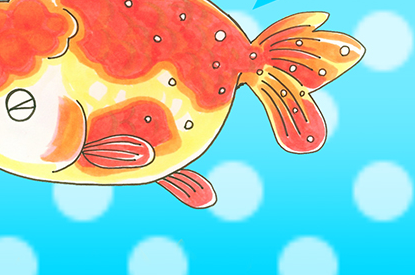
Ich is the disease every fishkeeper meets sooner or later: a scatter of tiny white grains, as if someone dusted the fish with salt, appearing first on the fins and then across the whole body. In Japan we call it hakuten-byō (白点病) , literally "white spot disease." The name is plain, and so is the danger. Left alone, ich does not clear up. It multiplies, spreads to every fish in the tank, and once it reaches the gills it suffocates them.
Here is the fact that most ich advice skips: the parasite is killable only during a few hours of its life. While it sits on your fish as a white spot, it is armored and nearly immune to medication. So the single most effective first move is not to pour in more chemicals. It is to raise the water temperature, the standard Japanese approach and the reason our treatments finish fast. This guide starts with a diagnosis table, then the parasite's life cycle, then the heat-and-medication cure and the US products that work.
- Ich is a parasite (Ichthyophthirius multifiliis), not a bacterium. It does not heal on its own; waiting only lets it breed.
- The white spot on the fish is shielded. Medication kills the parasite only during its free-swimming stage, so timing beats dosing.
- Raise the temperature to 82–86°F (28–30°C), about one degree Celsius a day. Heat shortens the life cycle and forces the parasite into the stage you can actually kill.
- Treat the whole tank, not just the spotted fish. By the time spots appear, the tank is already seeded.
- US note: ich cures (Ich-X, Kordon methylene blue, API Super Ick Cure) are antiparasitics, not antibiotics, so the 2023 FDA rules that pulled many fish antibiotics barely touch them. They are still on the shelf.
- Salt and a UV sterilizer support the cure. They do not replace it.
Is It Ich? Start Here
Before you dose anything, confirm what you are looking at. Ich has a distinctive appearance, and several other conditions get mistaken for it and need completely different treatment.
| What you see | Most likely | Your move |
|---|---|---|
| Distinct white grains, like sugar or salt, roughly 0.5–1 mm, on the fins first, then the body | Ich, early stage | Start heat treatment today |
| Fish "flashing": darting and scraping its side on décor or substrate, fins clamped, before any spots show | Ich, very early — or general irritation | Test water, watch daily, prepare to treat |
| Body heavily dusted with dots; fish gasping at the surface or hanging by the filter outflow | Ich, advanced (gills involved) | Treat now; the outcome is guarded |
| Fluffy, cotton-like white tufts, not separate pinpoints | Fungus, not ich | Different treatment (antifungal) |
| Greyish film or excess slime, no clearly separate dots | Costia, Chilodonella, or columnaris | Different treatment; see our fin rot and bacterial guide |
The tell for true ich is that each spot is raised and discrete, like a grain, rather than a smear or a patch. If you are unsure, watch for a day: ich spreads and multiplies quickly, and the flashing behavior almost always shows up alongside it.
Why Ich Is So Hard to Kill
Everything about the treatment follows from one thing: the parasite spends only part of its life in a form you can reach. The cause of ich is not a bacterium but a single-celled ciliate. It runs through three stages, and only the last one is exposed.
| Stage | Where it is | Can medication reach it? |
|---|---|---|
| Feeding (trophont) — the visible white spot | Burrowed under the fish's skin and mucus, feeding on the fish | No. The fish's own tissue shields it |
| Reproductive (tomont) | Detaches, drops to the glass or substrate, and divides into hundreds of new parasites inside a capsule | Partly, and unreliably |
| Free-swimming (theront) | Swims in the open water hunting a host; must find a fish within roughly a day or it dies | Yes. This is the only window medication and UV light reach it |
This is why dumping medicine on a spotted fish feels useless: the spots you can see are the one stage the medicine cannot touch. You are really waiting for each parasite to mature, drop off, reproduce, and release its offspring into the water, then killing those swimmers before they find a new host.
Temperature Is the Lever
The parasite is tough in cool water and fragile in warm water, and warmth speeds up its whole life cycle. At normal tank temperatures the parasite takes roughly a week to mature and multiply; warming the tank to 82–86°F (28–30°C) shortens that cycle. Speeding it up forces the feeding parasites to mature and drop off sooner, and pushes the population through the vulnerable free-swimming stage faster, where your medication is waiting. Heat does not kill the spot on the fish directly; it shortens the siege. In Japan this warming step is called shōon (昇温) , and it is the backbone of the treatment.
Treatment 1: Raise the Temperature

Start here, and do it gradually. A sudden jump stresses an already weakened fish.
| Step | Details |
|---|---|
| 1. Add an air stone first | Warm water holds less oxygen, and a sick fish needs more of it. Get aeration running before you turn up the heat |
| 2. Raise to 82–86°F (28–30°C) | Set the heater and let the tank climb about one degree Celsius (roughly two degrees Fahrenheit) per day, not all at once |
| 3. Hold it there | Keep the temperature up through the whole treatment, not just until the spots fade |
| 4. Check your species | Most community fish tolerate the mid-80s°F for a couple of weeks, but some coldwater and soft-water species do not. Confirm before you commit |
Heat alone will sometimes clear a mild case, but on its own it is slow and unreliable. Its real job is to make the medication and any UV sterilizer far more effective by driving the parasites into the open faster.
Treatment 2: The 0.5% Salt Bath
The salt bath (ensui-yoku (塩水浴) ) is a supporting move, not a cure by itself. Salt will not kill the ich parasite, but it slows the parasite's activity and, more importantly, eases the osmotic workload on the fish so it can put energy into recovery. For a fish worn down by an infestation, that matters.
The standard therapeutic strength is 0.5%: 19 grams per gallon (5 g per liter). Weigh it with a cheap kitchen scale rather than guessing with a spoon. Go higher and you burden the fish; go lower and you get little benefit. Keep live plants out of a salted tank, and remember that a display tank should never be brought to this strength. We cover the full method, including how to dose up and return to fresh water safely, in our dedicated salt bath guide.
Treatment 3: Medication

Medication is what finishes ich, working on the free-swimming parasites while heat drives them into the water. Dose the whole tank, follow the label strength, and keep the water aerated.
Because the medicine only hits one stage of the cycle, a single dose is never enough. Treat across the full life cycle and keep re-dosing with your water changes for at least a week, often two. In Japanese fishkeeping this medication bath is called yakuyoku (薬浴) .
Watch the Filter and the Sensitive Fish
Remove activated carbon from your filter before dosing, or it will strip the medication straight back out. Keep water moving for oxygen. And go easy on sensitive stock: scaleless fish such as loaches and some catfish, along with fry, react badly to full-strength malachite green and formalin. Start them at a half dose, or use the gentler methylene blue, and watch closely.
Treatment 4: UV Sterilizer and Prevention
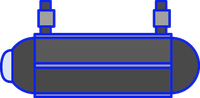
A UV sterilizer kills free-swimming parasites as the water passes the lamp. It will not touch the spots on your fish, but during an outbreak it steadily thins each new generation of swimmers, and as a permanent fixture it is one of the best defenses against ich ever taking hold. The trade-off is the upfront cost and that it does not fit every filter setup.
Prevention is cheaper than any of this. Ich almost always arrives on a new fish or plant. Quarantine new arrivals in a separate tank for a couple of weeks before they join your display, and even a few days of observation catches many cases. This is the single habit that prevents most outbreaks.
Do You Need to Sterilize the Tank?
Not by tearing it down. Because the parasite lives throughout the whole tank once an outbreak starts, treating the entire display with heat and medication is the point. If you moved a fish to a hospital tank, remember the display still holds free-swimming parasites, so either treat the display too or leave it running warm and fish-free for a couple of weeks until the swimmers starve. If you must reuse filter media from an infected setup, heat-resistant ceramic media can be sanitized in water around 140°F (60°C); everything else is simpler to replace.
A Note for Saltwater Keepers
What looks like the same disease in a marine tank is caused by a different parasite (Cryptocaryon irritans). It needs different treatment, and the freshwater heat-and-medication approach here does not carry over directly. This guide is for freshwater fish.
FAQ
- Q. Will ich clear up on its own if I just wait?
- A. No. The parasites leave the fish for a day or two as they reproduce, which can look like recovery, then return in far greater numbers. Ich does not self-cure, and left untreated it usually ends in losing the tank. Start treatment the day you spot it.
- Q. Do I treat the whole tank or just the fish with spots?
- A. The whole tank. By the time white spots are visible, free-swimming parasites are already through the water and every fish is exposed. Warming and dosing the display tank, with the carbon removed, treats every stage at once. Isolating only the spotted fish leaves the reservoir behind.
- Q. Ich-X, methylene blue, or API Super Ick Cure: which should I use?
- A. All three work on free-swimming ich. Ich-X (made by the Japanese company Hikari) is formaldehyde-based, does not stain the tank blue, and is gentle enough that most keepers dose it right in a planted display tank — it is the popular default. API Super Ick Cure is malachite-green-based and fast, but it stains seams, décor and plants blue and is hard on plants, so use a hospital tank or accept a blue tint. Kordon methylene blue is gentlest and the better pick for fry and scaleless fish. Whichever you choose, dose across the full life cycle, not just once.
- Q. How long until the spots are gone and I can stop?
- A. Expect spots to keep coming and going for the first several days, because you are only killing swimmers, not the parasites still on the fish. The parasite's cycle runs about a week, so plan to keep treating for at least one to two weeks, and do not stop the moment the last spot disappears. Stopping early is the most common reason ich comes back.