Amano Shrimp Care: Feeding, Tank Mates, and Why Breeding Is So Hard — a Guide from the Shrimp's Home Country
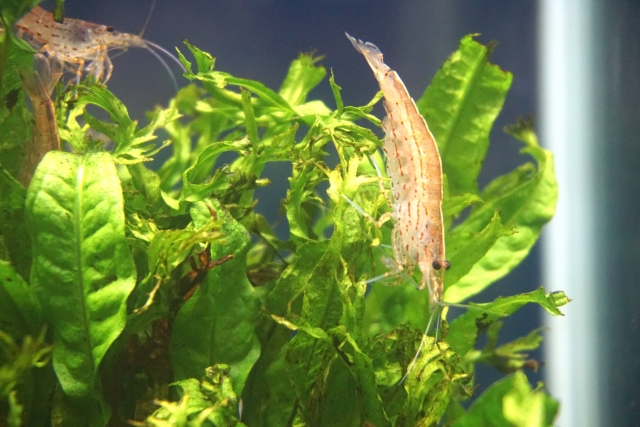
The shrimp you know as the Amano shrimp lives in the clear upstream rivers of our home country. In Japan we call it Yamato-numa-ebi (ヤマトヌマエビ) — the "Yamato swamp shrimp." The English name honors Takashi Amano, the legendary Japanese aquascaper who introduced the world to its remarkable appetite for algae. Our maintenance teams in Tokyo have used this shrimp in hundreds of client aquariums for one simple reason: nothing else cleans hair algae off plants as thoroughly.
Amano shrimp are hardy, but we regularly hear the same complaint from beginners: "they keep dying on me." Almost every time, the cause is one of two things — water that changed too fast, or summer heat. This guide covers everything: water parameters, feeding, tank mates, and the honest truth about breeding.
- Amano shrimp are the best algae eaters for hair algae on plants — one shrimp per 2–3 gallons is our working ratio for algae control.
- Keep them at 68–82°F (20–28°C), neutral to slightly alkaline water. They tolerate cold, but sustained heat above 86°F (30°C) is dangerous.
- They are very sensitive to sudden water changes — always drip-acclimate, and refill large water changes slowly.
- Breeding in freshwater is virtually impossible: the larvae must develop in brackish water. Don't buy a pair expecting babies.
- Avoid keeping them with angelfish, larger cichlids, or any predatory fish — to them, shrimp are food.
What Is an Amano Shrimp?
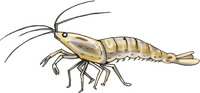
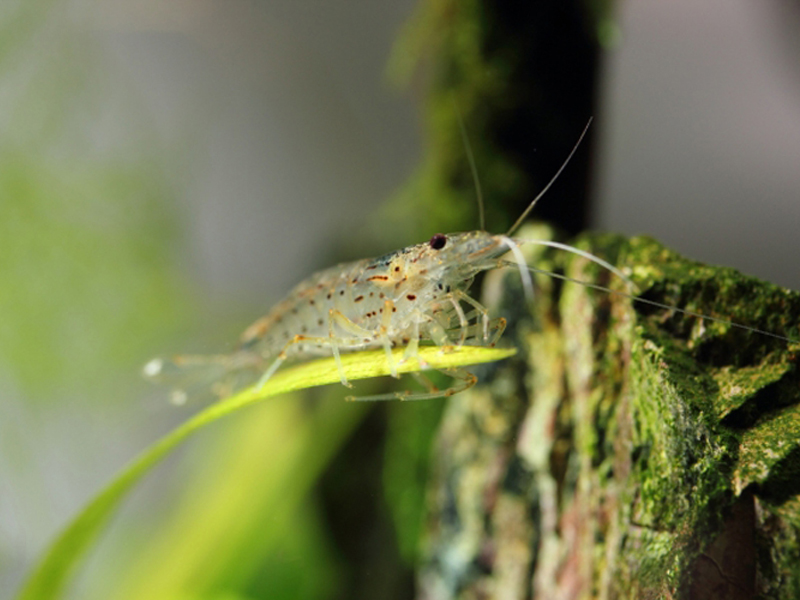
Caridina multidentata is a freshwater shrimp in the family Atyidae, growing to about 1.2–2 inches (3–5 cm) — females noticeably larger than males. In the wild it lives in the clean middle and upper reaches of Japanese rivers.
Here is the part most keepers never learn: Amano shrimp don't spend their whole lives in freshwater. Females release hatched larvae that drift downstream into brackish estuaries or the sea. The larvae develop there, become tiny shrimp, and then climb back upstream — sometimes for miles. This life cycle is the single most important fact about the species, because it explains both their athletic hardiness and why you cannot breed them in your tank (more on that below).
Water Parameters and Tank Setup
Amano shrimp thrive in an ordinary tropical community tank. When they fail, it is almost always water stability or temperature.
| Parameter | Ideal range | Notes |
|---|---|---|
| Temperature | 68–82°F (20–28°C) | Native to temperate Japan — they winter outdoors in our ponds if the water doesn't freeze. Heat is the real killer: use a fan or cooling in summers above 86°F (30°C) |
| pH | 7.0–7.5 (neutral to slightly alkaline) | Slightly acidic water is also fine in practice |
| Acclimation | Drip method, 1 hour+ | The #1 cause of "mystery deaths" in the first week is skipping this |
One habit from our maintenance work in Tokyo: when doing a large water change on a shrimp tank, refill slowly — a sudden swing in water chemistry can shock shrimp that have lived happily in the tank for months.
Amano Shrimp and Planted Tanks
This is where the species earned its fame. In the Nature Aquarium style pioneered by Takashi Amano, lush plants and pristine glass are everything — and Amano shrimp are the workforce that makes it possible. They eat the stubborn hair algae and fuzz algae that grow on plant leaves, exactly the algae human hands can't clean.
One honest caveat: they occasionally graze on tender new plant shoots. If your plants are getting eaten, you have too many shrimp for the available algae — reduce the headcount or supplement their diet.
What to Feed Amano Shrimp

In an established tank they mostly feed themselves: algae, leftover fish food, and biofilm on the substrate. To keep them in top condition, offer a sinking shrimp food once or twice a week, in small amounts. If you keep other algae eaters (otocinclus, plecos), watch that the algae supply doesn't run out — shrimp can quietly starve in a spotless tank.
Amano Shrimp vs. Cherry Shrimp
In the US, the other shrimp everyone keeps is the cherry shrimp (Neocaridina davidi). In Japan we keep its wild cousin, the Minami-numa-ebi (ミナミヌマエビ) , and the comparison is a daily conversation in our work. Choose based on your goal:
| Amano shrimp | Cherry shrimp | |
|---|---|---|
| Size | 1.2–2" — big and visible | ~1" — smaller |
| Algae-eating power | Much stronger — handles tougher, mature algae; ideal for large tanks | Light grazing only |
| Breeding in freshwater | Virtually impossible | Effortless — colonies grow on their own |
| Best for | Algae control, planted tanks | Color, breeding projects, nano tanks |
Why You Can't Breed Amano Shrimp in Your Tank
Females carry eggs readily in captivity — that part happens all the time. But the hatched larvae must develop in brackish water, feeding on plankton, and then be transitioned back to pure freshwater at exactly the right stage. Replicating a river-to-sea-and-back migration in glass boxes requires multiple tanks, live plankton culture, and weeks of daily salinity management. Even in Japan, where this shrimp is a national favorite, only dedicated breeders succeed. As working aquarists, our advice is simple: enjoy the berried females, and buy your next generation.
Tank Mates: Safe and Unsafe
Amano shrimp are peaceful and never attack fish. The question is always the reverse — will your fish eat the shrimp?
| Good tank mates | Avoid |
|---|---|
| Small peaceful community fish: tetras, rasboras, corydoras, otocinclus, medaka (ricefish) | Angelfish and medium/large cichlids, goldfish large enough to swallow them, loaches with a taste for shrimp, and any predatory fish — shrimp are literally sold as live food |
Two more notes from our installation work:
First: if the tank also houses dedicated algae grazers, provide shrimp food so nobody starves. Second: Amano shrimp may bully much smaller ornamental shrimp like crystal/bee shrimp in tight quarters. Unless the tank is very large, keep those colonies separate.
FAQ
- Q. My Amano shrimp died within a week. Why?
- A. Almost always acclimation shock. Drip-acclimate for at least an hour, and never move shrimp straight between tanks with different water. The second most common cause: summer heat above 86°F (30°C).
- Q. My shrimp is carrying green eggs. Will I get babies?
- A. The eggs will hatch, but the larvae need brackish water to survive — in a freshwater tank they will not make it. This is normal and not a sign anything is wrong.
- Q. How many do I need for algae control?
- A. Our working ratio is one shrimp per 2–3 gallons for an active algae problem. For prevention, half that is plenty.
- Q. Do Amano shrimp eat fish poop?
- A. No — no shrimp does. They eat algae, biofilm and leftover food. Waste removal is still your filter's and your siphon's job.