Cherry Shrimp Care: Colors, Breeding, and What Kills Them — a Guide from Japan
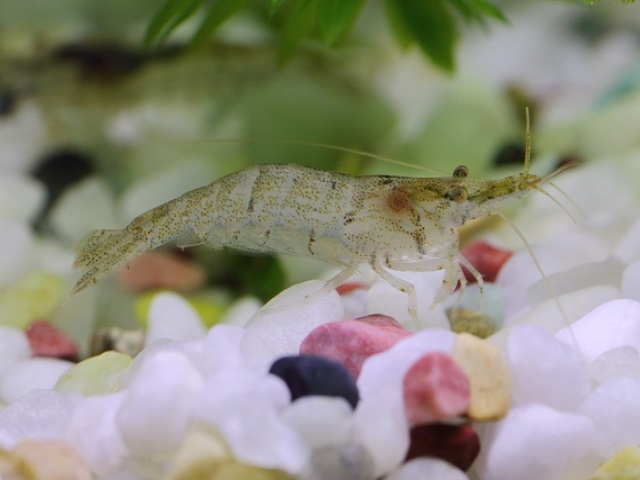
The little red jewel most US hobbyists call the cherry shrimp is Neocaridina davidi, a color-selected line bred from a plain, semi-translucent wild shrimp of mainland Asia. Every screaming-red, deep-blue, or lemon-yellow cherry shrimp you buy descends from that unassuming pond shrimp, selected over many generations. It has one very close Japanese relative worth knowing about: the wild Minami-numa-ebi (ミナミヌマエビ), the "southern swamp shrimp" of our ponds and rice paddies. The two are separate species in the same genus, and that distinction matters, because they interbreed freely, and a cross drags the cherry's color back toward drab wild brown. Keep cherries away from wild minami shrimp.
If you have read our Amano shrimp guide, you already know the other shrimp we keep. The two are easy to confuse but are used for opposite jobs. Amano shrimp are big, drab, powerful algae eaters that cannot breed in your tank. Cherry shrimp are small, colorful, gentle grazers that breed effortlessly in plain freshwater, which is exactly why people fall in love with them and occasionally end up with far more shrimp than they planned. This guide covers the colors and grades, water, breeding, tank mates, and the honest list of what actually kills them.
- Cherry shrimp are a color-selected line of Neocaridina davidi, a wild Asian pond shrimp — hardier and more forgiving than Caridina "crystal" shrimp.
- Keep them at 72–77°F (22–25°C), pH 6.0–7.5, soft water. They handle cool water down to about 63°F (17°C) but dislike sustained heat.
- They breed on their own in freshwater — no brackish water, no special setup. A healthy pair becomes a colony.
- To keep bright color, breed one color line at a time; mixing grades or crossing colors dulls the offspring toward wild brown.
- Most deaths are environmental, not disease: pH/temperature shock, copper, and pesticide-treated plants are the big killers.
- Safe with small peaceful fish, but keep them away from minami/wild Neocaridina to avoid crossbreeding.
What Is a Cherry Shrimp?
Cherry shrimp are small dwarf shrimp in the family Atyidae, reaching about 0.8–1.2 inches (2–3 cm) and living roughly 1–2 years. Compared with the pricey, water-fussy crystal shrimp everyone admires, cherry shrimp are cheaper, tolerate a wider range of water, and breed far more easily, which is why they are the standard beginner shrimp in both Japan and the US.
What sets them apart is the range of color. Selective breeding has produced red, orange, yellow, green, blue, black, and snow-white lines, all descended from the same drab wild Neocaridina stock. Keep several colors in one tank and you will sometimes see odd-colored babies appear. That is fun, but it is also a warning: crossing colors erodes them. If you want a tank full of one pure, vivid color, keep that color alone.
Cherry Shrimp Grades and Colors
In the US hobby, red cherry shrimp are usually sold by grade, which describes how much of the body is solid red and how opaque the color is. Higher grades cost more but are simply more heavily selected — the animal is the same species. From lightest to deepest:
| Grade (red line) | Look |
|---|---|
| Red Cherry | The classic: bright but translucent, with clear patches showing through. The most affordable and forgiving starter. |
| Sakura | More solid red over most of the body, fewer clear gaps. The everyday "just looks red" grade. |
| Fire Red | Nearly the whole body a vivid, opaque red, legs included. |
| Painted / Bloody Mary | Deepest, most saturated red — a rich wine-red that stays solid even on the legs and shell. |
Beyond red, the same species is sold in many other colors. A few US readers meet by name:
| Color line | Notes |
|---|---|
| Blue (Blue Dream, Blue Velvet, Blue Jelly) | From deep dark blue to a pale, icy translucent blue — the most eye-catching in a planted tank. |
| Yellow (Yellow, Golden Back) | Bright lemon; some lines carry a white-gold stripe down the back. Pops against green plants. |
| Orange (Orange Sakura, Pumpkin) | Vivid vitamin-orange; color intensity varies shrimp to shrimp. |
| Snow White (White Pearl) | Soft, milky, translucent white — calm and neutral in any layout. |
| Rili (Red Rili, Orange Rili, Carbon) | A two-tone variant: colored ends with a clear "window" in the middle of the body. |
One point that trips up US buyers: crystal red shrimp (also called bee shrimp) are not cherry shrimp. Those belong to a different genus, Caridina, and want cooler, softer, more acidic water plus real attention to parameters. Do not treat a "crystal red" like a cherry shrimp. This article is about the easier Neocaridina shrimp.
Water Parameters and Tank Setup
Cherry shrimp are forgiving, but they are still shrimp: more sensitive to swings than tropical fish. Aim for stability over perfection. When we set up a shrimp tank for a client, these are the numbers we hold.
| Parameter | Target | Notes |
|---|---|---|
| Temperature | 72–77°F (22–25°C) | They survive down to about 63°F (17°C), so an unheated indoor tank often works. Heat is the danger: cool the tank with a fan or chiller in summer. |
| pH | 6.0–7.5 | Slightly acidic to neutral. This mirrors the water their wild ancestor lives in. |
| Hardness (GH) | Around GH 1 and up (soft) | They need some minerals to molt properly, so extremely soft water can cause molt problems. |
| Acclimation | Drip method, 1 hour+ | The single biggest cause of first-week deaths is rushing new shrimp into the tank. |
Two setup choices matter more for shrimp than for fish. Filtration: use a filter that will not vacuum up shrimplets. Sponge filters are the classic shrimp-tank answer; a covered intake on a canister or an undergravel filter also works. Flow can be gentle because shrimp barely foul the water. Substrate and plants: an active "soil" substrate helps hold that mildly acidic pH, and heavy planting keeps shrimp calm and fed. Java moss is the shrimp keeper's favorite — the colony hides in it, grazes on it, and shrimplets shelter in it.
One caution for planted-tank owners: heavy CO2 injection lowers dissolved oxygen, and low oxygen suppresses shrimp breeding. If your goal is a growing colony, go easy on the CO2 and keep the water well oxygenated.
What to Feed Cherry Shrimp

The main food should be a dedicated sinking shrimp pellet, offered in small amounts you know they will finish. Uneaten food fouls the water fast in a small shrimp tank, so feed light. It is a myth that shrimp live on algae alone. In a mixed tank people often add cherry shrimp as cleanup grazers and then never feed them — and the shrimp slowly starve once the visible algae is gone. If the glass is spotless, your shrimp still need feeding.
Because they are crustaceans, cherry shrimp also need minerals and calcium to molt and to hold color. A quality shrimp food usually covers this; heavy breeders sometimes add a mineral supplement. Boiled vegetables like spinach are eaten happily, but only if the produce is pesticide-free (more on that danger below).
Cherry Shrimp Breeding
This is where cherry shrimp shine and where they part ways with Amano shrimp. Amano larvae need salt water to develop, so you cannot breed them at home. Cherry shrimp do the whole thing in plain freshwater: a female carries eggs under her tail, fans them for a few weeks, and releases fully formed miniature shrimp that fend for themselves. No brackish tank, no larval feeding, no salinity juggling. Give a healthy group a stable tank with moss and they will do the rest.
Breed One Color at a Time
The catch is keeping the color. A tank of mixed grades or mixed colors looks gorgeous, but breed it out and the offspring drift back toward the drab, brownish wild type — the ancestral Neocaridina genes reasserting themselves. To hold a vivid, uniform color across generations, keep and breed a single color line. Refreshing the colony occasionally with new stock of the same color helps prevent the slow fade that comes from breeding a closed group for years.
Separate Berried Females (If You Want the Most Babies)
A female carrying eggs is called "berried." In a shrimp-only tank you can leave her be, since the moss protects the shrimplets. But in a community tank, newborn shrimp are bite-sized snacks, and most get eaten. If you are breeding seriously, move a berried female to a small breeder box or separate tank, ideally with a little moss so she stays calm, and let her release there.
Telling Males from Females
Young shrimp under a month old are hard to sex. Once mature, females show clear signs:
| Females | Males |
|---|---|
| Deeper, more vivid color; larger body; a rounded "saddle" (the yellow ovaries) visible on the back; a broader underside for carrying eggs | Smaller, slimmer, and usually paler in color |
If you are unsure, just buy about ten. In a group that size you will almost certainly get both sexes and a colony started.
Keeping the Color Bright
Cherry shrimp color is not fixed for life. It responds to conditions, and a colony can slowly fade. Four causes account for most of it:
- Stress: healthy shrimp are colorful shrimp. Unstable water or temperature drains color first. Fixing the basics usually restores it.
- Poor nutrition: without enough minerals and calcium, color dulls. Switch to a better shrimp food or add a mineral supplement.
- Background color: shrimp adjust to their surroundings like camouflage, going pale over a bright bare tank and deeper over a dark substrate. A black soil substrate visibly deepens red and blue lines.
- Generations and crossing: breeding a closed colony for many generations, or mixing colors, both push offspring toward washed-out brown. Add fresh same-color stock now and then.
Tank Mates: Safe and Unsafe
Cherry shrimp are peaceful and never harm fish. As with any dwarf shrimp, the real question is whether your fish will eat the shrimp, plus one issue unique to them: crossbreeding.
| Good tank mates | Avoid |
|---|---|
| Small peaceful fish that share their cool, soft water: neon and other small tetras, small rasboras, otocinclus, corydoras, and small ricefish | Anything with a mouth big enough to eat them: angelfish, medium and large cichlids, larger goldfish, and any predatory fish. Also avoid mixing color lines, and avoid wild Neocaridina (minami shrimp) — they interbreed and dull the color |
Two more notes from our maintenance work. First, cherry shrimp make excellent members of a planted-tank cleanup crew, but "cleanup crew" does not mean "no feeding" — a shrimp that runs out of algae will starve just as surely in a spotless tank. Second, cherry shrimp and true crystal/bee shrimp (Caridina) do not crossbreed, so those two can share a tank if the water suits both; the crossbreeding risk is only with other Neocaridina, especially the wild minami shrimp.
What Kills Cherry Shrimp
Dwarf shrimp are more delicate than fish, and once conditions slip, losses can cascade, with several shrimp dying in a chain rather than one at a time. The good news is that the causes are almost always environmental, not disease, so keeping conditions steady is most of the battle. Here are the real killers.
pH and Temperature Shock
The most common cause of death, especially in shrimp that die within days of arriving. The animal simply cannot cope with a fast change in water. Two habits prevent it: drip-acclimate new shrimp over an hour or more, and during water changes, match the new water's temperature to the tank so a refill does not swing conditions. Cherry shrimp handle cool water well but are poor with heat, so in warm months a fan or a small chiller earns its keep.
Failed Molts
Shrimp grow by shedding their shell. If you find a shrimp with old shell stuck to part of its body, that is a failed molt, usually from a calcium or mineral shortage and sometimes worsened by water that is too soft. It is an environmental problem, so if you see one, others may follow. A shrimp-specific mineral supplement or a harder mineral base fixes it.
Low Oxygen
Shrimp colonies use more oxygen than people expect, because there are many of them and they keep breeding. A tank running low on oxygen leaves shrimp sluggish and can kill them. If the colony seems listless for no obvious reason, add an air stone. More dissolved oxygen also improves breeding, which is another reason to go easy on heavy CO2 injection.
Starvation
Surprisingly common, and almost always in community tanks where the shrimp were added purely as algae grazers. Algae and leftovers are not always present, so once the tank is clean the shrimp have nothing to eat. Feed them directly, and keep a generous clump of java moss as a fallback grazing surface.
Copper and Pesticides (Two US-Specific Traps)
Two hazards deserve special attention in the US because they are easy to walk into. Copper is toxic to all invertebrates: many common fish medications — especially those for ich and external parasites — are copper-based and will wipe out a shrimp colony. Before treating a shrimp tank with any fish medication, check the label and confirm it is invertebrate-safe. Pesticides are the other trap: aquarium plants and vegetables can carry residue that is harmless to fish but lethal to shrimp. Buy plants labeled shrimp-safe or pesticide-free, quarantine and rinse new plants thoroughly, and only ever offer pesticide-free vegetables.
Don't Let the Colony Get Away From You
Cherry shrimp breed so readily that a good tank can overflow with them. Each shrimp is tiny, but a colony can outgrow what you can house and care for, so thin the numbers before that happens by rehoming extras to another hobbyist. One thing to never do: do not release shrimp into local waterways. In the US, releasing aquarium animals is both irresponsible and often illegal, and can introduce a non-native species that competes with or interbreeds with local wildlife. Once you take on a shrimp colony, it is yours to keep or to rehome responsibly.
FAQ
- Q. My cherry shrimp died a few days after I added them. Why?
- A. Almost always acclimation shock. Drip-acclimate over at least an hour and never drop shrimp straight into water with a different pH or temperature. The next most common causes are copper in a recent medication and residual pesticide on new plants.
- Q. Do I need a special setup to breed them, like Amano shrimp?
- A. No. Cherry shrimp breed in ordinary freshwater with no intervention, which is the main reason they are more popular than Amano shrimp for home breeding. Give a healthy group a stable, planted tank and you will get babies.
- Q. Why are my shrimp turning brown over time?
- A. Usually color loss from mixing lines or from breeding a closed colony for many generations, both of which pull the offspring back toward the wild brown ancestor. Keep one color line and refresh it occasionally with new same-color stock. A dark substrate also keeps color deeper.
- Q. Can cherry shrimp live with crystal (bee) shrimp?
- A. Yes, because they are different genera and will not crossbreed. The catch is water: crystal shrimp want cooler, softer, more acidic conditions, so the tank has to suit both. Never mix cherry shrimp with wild minami-type Neocaridina, though — those will interbreed and ruin the color.