Rare Fancy Goldfish: 10 Varieties Prized in Japan
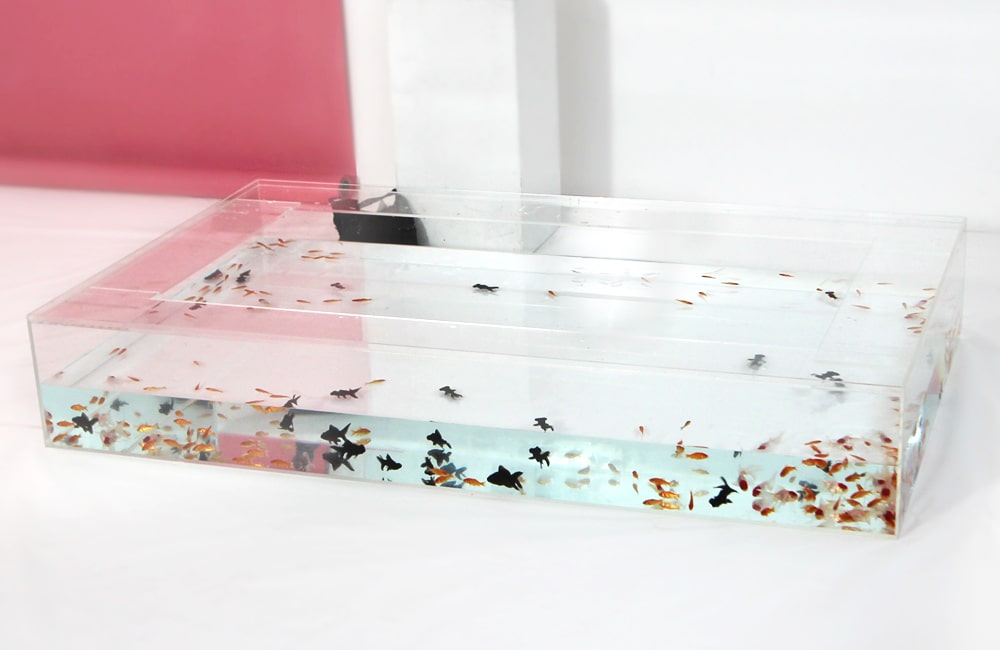
In Japan we call the goldfish kingyo (金魚): the characters for "gold" and "fish." No ornamental fish has shared a longer history with us, and that history is not finished. Crossbreeding medaka is Japan's current boom (see our medaka varieties guide), but crossing goldfish is the older art, and it still makes news: in 2017 the breeder Yadoru Kawahara (川原やどる), known in the hobby as the kingyo sennin (金魚仙人), the "goldfish sage," unveiled a green goldfish named Haruyadoru (はるやどる). Nobody knows where the goldfish's limits are.
Below is our Japanese team's countdown of ten rare goldfish, plus one wild card, rewritten for US readers. One is easy to find in America; most are not, and we will be straight about which is which.
- The ranking reflects rarity, beauty and story as our Japanese editors judge them, not ease of care.
- Rare does not mean fragile. The No. 1 fish is a tough wakin at heart; the genuinely hard ones are the Tosakin, Japan's reputed hardest goldfish, and the nearly blind Bubble Eye.
- New breeds keep appearing: the sparkling Kirakira, the pale Muse, and the green Haruyadoru of 2017.
- Two are giants. The Jumbo Oranda reaches about 50 cm (20 in), the Broadtail Ryukin about 30 cm (12 in); both want a 4-foot (120 cm) tank or larger.
- In the US, only the Bubble Eye is easy to find; the rest mean specialty breeders, club auctions or importers, and several are likely not exported at all.
Read the Names First
Japanese goldfish names are built from a small vocabulary; learn it and the names on this list mostly decode themselves. A long "o" is often written ou: Touroku-rin is "toh-roh-koo-reen."
| Word | Japanese | Meaning | Where it appears |
|---|---|---|---|
| wakin | 和金 | "Japanese gold," the slim ancestral body type | No. 1, No. 8 |
| ryukin | 琉金 | the deep-bodied fancy type | No. 5 |
| ranchu | 蘭鋳 | round body, no dorsal fin | No. 10 shares its build |
| nishiki | 錦 | brocade, an honorific for prized breeds | Tosakin, Suehiro Nishiki, Sakura Nishiki |
| sanshoku | 三色 | three colors: vermilion, white, black | No. 1 |
| sarasa | 更紗 | red-and-white calico mottling | No. 3, No. 7 |
Metallic and Sparkling: The Rare Wakin
The wakin is the goldfish closest to the ancestral form, and the nagamono (長物), "the long ones," hold a stubborn popularity in Japan. These two dress that plain silhouette in light.
No. 1 · Ginrin Sanshoku Wakin (銀鱗三色和金) — Also sold as the Metallic Calico Wakin. The silhouette is an ordinary three-tailed wakin, but the body carries vermilion, white and black under scales that gleam like beaten metal; the shine reads from across a room. Connoisseurs prize the black patches, sumi (墨), "ink," as accents in the metallic ground. A wakin underneath, it is robust and undemanding; the price is the hard part, since rarity keeps it steep. Difficulty: easy, wakin constitution · scarce, priced for its rarity.
No. 8 · Kirakira (キラキラ) — The name is simply the Japanese word for "sparkling," and it describes the fish exactly. A wakin silhouette again, but every scale glitters like fine lamé, a finer grain than the No. 1 fish above. Most are yamabuki (山吹), a warm golden yellow, shading to orange; a comet-tailed type exists. Ordinary difficulty, ordinary tank size. The rookie of the goldfish world. Difficulty: ordinary · standard goldfish tank is fine · very new breed.
Masterpieces of the Tail
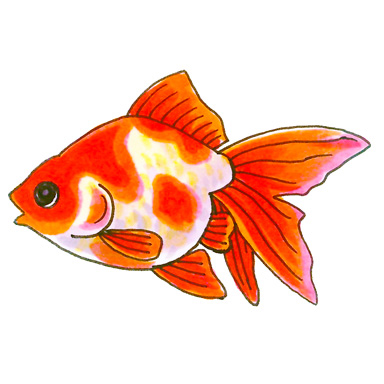
Japan's regional goldfish culture concentrates above all on the tail. These three carry the most storied tails on the list.
No. 2 · Tosakin (土佐錦) — Established as its own breed in Kochi Prefecture, where it is a designated natural monument; within Japan, every Tosakin in circulation is domestically bred. Everything is about the enormous fanning tail, which makes it a very slow swimmer; the slowness is exactly what makes it graceful. It is also reputed to be the most difficult goldfish to keep: it prefers live itome (イトメ, tubifex worms) over pellets, wants clear water rather than green water, and favors slightly alkaline chemistry. Almost everything runs against standard goldfish practice. Reputed hardest goldfish · a specialist's fish.
No. 3 · Touroku-rin (藤六鱗) — A new face with a short history in the trade. Within the Jikin (地金) family, fish combining transparent scales with a sarasa (更紗) pattern of vermilion and white are called Touroku-rin. The see-through scales let the color glow from within, and the tail is a kujaku-o (クジャク尾), a "peacock tail" spreading in an X. Distribution is thin, prices run high, and because so few are kept, nobody yet knows which diseases it is weak against. Its beauty is judged worth the uncertainty. New, scarce and expensive · disease sensitivities not yet well known.
No. 6 · Suehiro Nishiki (寿恵廣錦) — A pedigree that made a round trip. The Shubunkin (朱文金) was created in Japan; England refined it into the Bristol Shubunkin, trading the long streaming tail for a round, heart-shaped one; Japan then reimported the Bristol and refined it again into this breed, the heart tail rounded into an open fan and the body given more height. It is scarcer than the Bristol Shubunkin and priced accordingly. Care is ordinary except for that tail: keeping the circle of fin in shape is more work than it looks, so Japanese keepers recommend slightly stronger current and slightly cooler water. Size is about that of a regular Shubunkin. Difficulty: ordinary, tail upkeep aside · rarer than the Bristol Shubunkin.
The Big Ones
Two fish here outgrow the usual goldfish setup. Both want a tank at least 4 feet (120 cm) long.
No. 4 · Jumbo Oranda (ジャンボオランダ) — Also called the Jumbo Shishigashira (ジャンボ獅子頭), "jumbo lion head." A cross between the Oranda Shishigashira and the wakin, a fish that keeps growing to around 50 cm (20 in). It has been handed down in Kyushu, around Kumamoto, where it is a hometown favorite. True to the lion-head name it grows a fluffy wen over the skull, and the small round eyes on that huge body give it an oddly endearing face. Its adult size keeps it from circulating widely, which is much of why it is rare. The wen-less line is called Hayato Nishiki (隼人錦). To ~50 cm (20 in) · tank 4 ft (120 cm) or larger.
No. 5 · Broadtail Ryukin (ブロードテール琉金) — A Ryukin (琉金) carrying a showy tail like a butterfly-tail's. The mark of a broadtail is substance: a firm, thick tail rather than a gauzy one. The fish grows to about 30 cm (12 in), and to watch the tail do its work you will want the 4-foot (120 cm) tank. Trailing that fin as it swims, it is elegance itself. Its opposite number, the Ryukin Shorttail, is also popular and also high-end. To ~30 cm (12 in) · tank 4 ft (120 cm) recommended.
Delicate Beauties
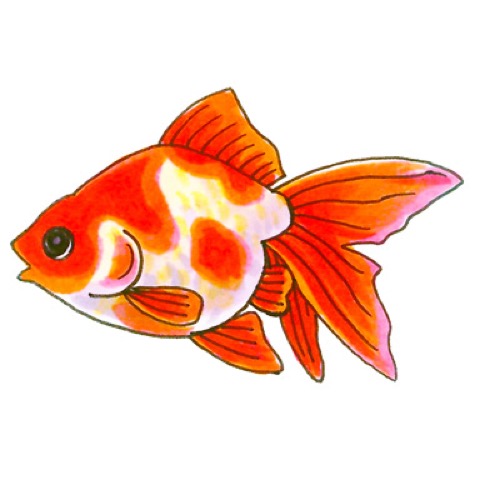
Round bodies, soft colors, and in one case the most vulnerable eyes in the aquarium world.
No. 7 · Bubble Eye / Suihougan (水泡眼) — A breed beloved in China, instantly recognizable by the balloon-like sacs under its eyes. The sacs are the cornea of the eye itself, filled with lymph fluid, and must never be touched. Red and sarasa fish are the mainstream and easy to buy; black and calico versions exist but are scarce and costly. This is a genuinely difficult fish: considered nearly blind, a weak swimmer, and slow to reach food before quicker tankmates do. Since the sacs can tear on rocks and ornaments, the tank has to stay almost bare. Difficulty: high · nearly blind, weak swimmer · bare layouts only.
No. 10 · Sakura Nishiki (桜錦) — Translucent vermilion and white scales blend into a soft pink, like the cherry blossom, sakura (桜), that names the breed. It is a marute (丸手), a round-bodied ranchu-type with no dorsal fin, so it cannot live with quick, slim wakin types. It does fine alongside ranchu, and a tank of nothing but Sakura Nishiki is charming in itself. Distribution is climbing and prices have started to settle, though they remain on the high side. Ranchu-type · house with ranchu or its own kind, never fast wakin.
The Green Goldfish Project, and One Wild Card
The last two show where goldfish breeding is heading, and where it came from.
No. 9 · Muse (ミューズ) — Named for the goddess, and the name suits it. Muse arose as a byproduct of Yadoru Kawahara's project to create his ideal green goldfish, the Haruyadoru, and is a cross of Tosakin and Azuma Nishiki (東錦). Body color varies fish to fish, from transparent-scaled through cream to yamabuki yellow. Our Japanese editor calls it the most fleeting, delicate-looking fish on the list. The same project has produced other breeds along the way, including one named Aurora (オーロラ). Tosakin × Azuma Nishiki cross · color varies by individual.
Bonus · Kuita Funakin (杭全鮒金) — Few people, even in Japan, have heard this name. A funakin (鮒金) is a cross between the goldfish and the wild funa (鮒), the crucian carp it originally came from. Because there is no telling which parent's traits will surface, fixing a true breed is close to impossible, and it sits in the hobby as a slightly odd goldfish with a wild streak. That plain, rustic look is quietly winning fans; our editor compares its charm to handmade pottery, a tea-bowl sort of fish. Wild funa × goldfish · traits unpredictable, not a fixed breed.
Finding These Goldfish in the United States

The realistic picture for American keepers:
- The Bubble Eye is the easy one. It is a mainstay of the fancy-goldfish trade, and the red and sarasa forms common in Japan are the same ones you will meet in US shops and online.
- For the rest, go where serious goldfish people are. Specialty fancy-goldfish breeders, importers of Japanese bloodlines, and goldfish-club auctions and shows are the realistic channels. Bring the Japanese names from this page; that is usually how listings are written.
- Several may not be available at all. Kirakira, Muse, Touroku-rin and the Kuita Funakin are new or regional enough that they may not have been exported yet. If a listing offers one, ask hard questions before you pay.
- Expect one-of-a-kind sales. These fish sell as single, individually photographed animals, not by the bag; ask for photos or video of the exact fish before paying.
- If you visit Japan, unusual breeds turn up at aquarium shops and at yougyo matsuri (養魚まつり), fish-farm festivals.
The variety count is still climbing. If you meet an odd goldfish at a shop or show, take a second look. And if you bring one home, spend time with it: goldfish are friendly, personable fish, and they repay the affection you give them.
FAQ
- Q. Which of these goldfish is the hardest to keep?
- A. The Tosakin, by Japanese reputation the most difficult goldfish there is: live itome over pellets, clear water instead of green water, slightly alkaline chemistry. The Bubble Eye is hard for different reasons: near-blindness and fragile sacs demand a bare tank and unhurried tankmates.
- Q. Can I realistically buy these varieties in the United States?
- A. Some of them. The Bubble Eye, yes, almost anywhere fancy goldfish are sold. The Tosakin, Sakura Nishiki, Broadtail Ryukin and Oranda types appear through specialty breeders, importers and goldfish-club auctions. The newest creations, such as Kirakira, Muse and Touroku-rin, have little or no presence outside Japan yet.
- Q. Why are rare goldfish so expensive?
- A. Scarcity more than difficulty. Many exist in small numbers, come from one region or one breeder's project, and sell as one-of-a-kind individuals rather than by the tankful. The No. 1 fish is as easy to keep as any wakin; you pay for how few there are.
- Q. Can rare goldfish live with ordinary goldfish?
- A. Match body type and speed. Slim, quick fish such as wakin and comets out-compete round, slow-bodied fish at feeding time. The Sakura Nishiki belongs with ranchu or its own kind, and the Bubble Eye is safest with its own kind in a bare tank. The two giants need their 4-foot (120 cm) tank sorted before tankmates are even a question.