10 Hardy Goldfish for Beginners: A Guide from Japan
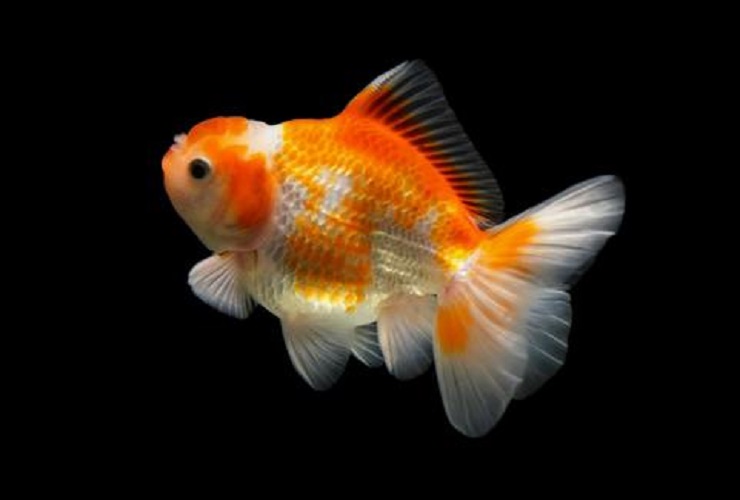
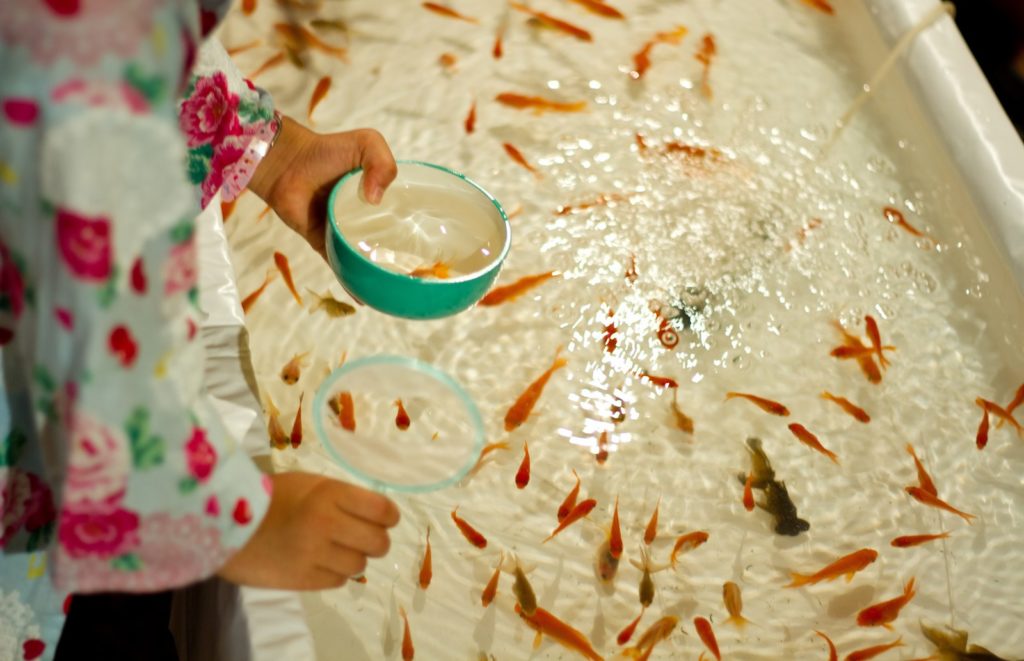
In Japan we call the goldfish kingyo (金魚), and a beginner's first one is almost always a plain, tough fish scooped at a summer festival. That is not a demotion. The goldfish that thrive for a decade in a home tank are usually the plainest ones, and the elaborate fancy breeds you fall for in the shop are often the ones that make a first year hard. A beautiful fish that dies in a month teaches nothing but discouragement.
This is the list our Japanese team hands to first-time keepers: ten goldfish that are strong, forgiving of small mistakes, and easy to buy in the United States. If you are already past the beginner stage and want the collector's end of the hobby, see our companion piece on rare fancy goldfish prized in Japan. This page is the other direction: the fish that let you learn.
- Body type predicts hardiness. Slim wakin-type fish (common goldfish, comet, shubunkin) are the toughest and fastest; round ryukin-type fish are prettier but prone to digestive and buoyancy trouble.
- The top three are nearly bulletproof. The sarasa common goldfish, the fin-tailed common goldfish, and the comet forgive beginner errors and can live well past ten years.
- Never mix slim and round. Fast wakin types out-compete slow round-bodied fish at feeding time; house each with its own build.
- Overfeeding, not disease, kills most first goldfish. Round breeds especially are prone to swim-bladder trouble from too much food (see our swim-bladder guide).
- All ten are easy to find in the US at good aquarium shops and online. Prices are modest; the plainest fish here is often the cheapest in the store.
Read the Body Type First
Before any breed name, learn the two silhouettes. Everything about care, tankmates and hardiness follows from which shape you are holding.
| Type | Japanese | Shape | What it means for you |
|---|---|---|---|
| wakin type | 和金型 | slim, torpedo-shaped like a wild carp | fast swimmer, very hardy, resists digestive trouble, grows large |
| ryukin type | 琉金型 | round, deep-bodied, short and tall | slower, showier fins, prone to overeating and buoyancy issues |
The rule that saves beginners the most grief: match speed to speed. A slim, quick fish will eat a round, slow one's share of food day after day, and the round fish slowly starves in plain sight. Keep the two builds in separate tanks, or keep only one type.
Two words worth learning, because they name colors you will see on this list. Sarasa (更紗) is the red-and-white mottled pattern. Calico, called kyariko in Japan, adds black and a pale blue-grey called asagi (浅葱) for a three-color mix.
The Bulletproof Wakin Types
If this is your first goldfish, buy from this section and nowhere else. These are the slim, fast, ancestral-shaped fish, the toughest goldfish there are.
No. 1 · Sarasa Wakin (更紗和金), the sarasa common goldfish — Close to the ancestral form and genuinely hard to kill, which is exactly why it tops a beginner list. Sarasa (更紗) means the red-and-white mottled coloring, and the fan-shaped three- or four-lobed tail (an open tail) makes it far more decorative than the plainest goldfish while staying just as robust. It eats floating or sinking food without fuss, stays peaceful, and reaches about 6 in (16 cm). Budget priced and forgiving. This is the fish to learn on. Difficulty: very easy · hardy · to ~6 in (16 cm) · peaceful, house with its own kind or fin-tailed types.
No. 2 · Wakin (和金), the fin-tailed common goldfish — The oldest goldfish kept in Japan, bred here since the Muromachi era (roughly 600 years ago). It carries a simple single tail like the wild funa (鮒), the crucian carp goldfish descend from, which makes it even closer to the wild type than No. 1: tougher still, faster, and quick to grow. In a good tank it can top 6 in (15 cm) and live past ten years. This is the classic festival goldfish, the cheapest fish in the shop, and one of the very best for beginners. Difficulty: very easy · the hardiest type · to ~6 in (16 cm) · pairs well with comets and shubunkin.
No. 3 · Comet (コメット) — An American breed, its English name needing no Japanese translation; it was created by crossing the common goldfish with the shubunkin. It has a slim wakin body and a long, single, streaming tail, and it swims fast enough that its name comes from the streak of a comet across the sky. Mostly red and white; the prized fish are cleanly symmetrical. Hardy and beginner-friendly, though it is an active swimmer that grows to around 8 in (20 cm), so give it room. Floating food suits it. Difficulty: very easy · strong swimmer, tolerates current · to ~8 in (20 cm) · house with its own kind or shubunkin.
Still Easy, With a Little More to Watch
These fish are still good beginner choices, but each asks you to pay attention to one thing: a round body, a special tail, or a taste for overeating.
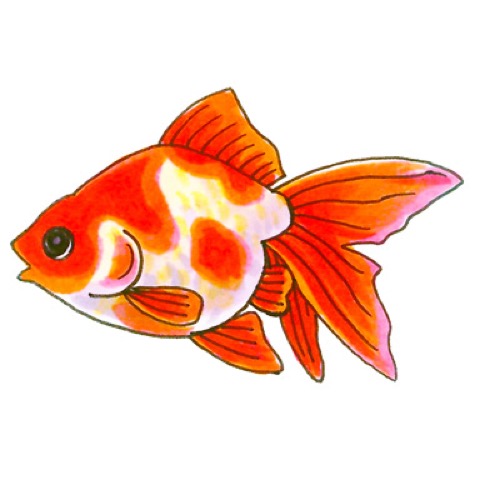 No. 4 · Ryukin (琉金) — The classic round-bodied goldfish. It came to Japan from China by way of the Ryukyu Islands (Okinawa), which gives it its name. Long-finned and short-finned lines both exist, in solid red (suaka, 素赤) and in sarasa, and the sarasa ryukin is a favorite of goldfish keepers worldwide. It swims slowly and is a poor competitor at feeding time, so keep it only with other round, slow fish. The one real job: do not overfeed, or the deep body tips into digestive and buoyancy trouble. Sinking food helps. Difficulty: easy · watch current and overfeeding · to ~6 in (16 cm) · house with its own kind only.
No. 5 · Shubunkin (朱文金) — A hardy calico bred in Japan around 1912, from a cross of calico telescope, common goldfish and wild funa. It has a slim wakin body and a streaming tail much like the comet, so it is fast and tough, but its color is the draw: a base of pale blue-grey asagi (浅葱) shot through with red and black, deepening as the fish matures. Strong, active and beginner-friendly, it reaches about 8 in (20 cm). Floating food and room to swim. Difficulty: easy · fast, tolerates current · to ~8 in (20 cm) · house with its own kind or comets.
No. 6 · Calico Ryukin (キャリコ琉金) — A ryukin in calico dress, created in Japan on an American request for a three-color ryukin. On a pale asagi base it carries red and black, on the deep, rounded ryukin body with big fins. It is a showpiece in a tank, and top-grade fish can cost a step more than a plain ryukin. Same care as the ryukin: slow swimmer, keep with its own build, and go easy on the food since it tends to eat too much and grow large. Many keepers show it on its own. Difficulty: ordinary · sensitive to overfeeding and current · to ~6 in (16 cm) · house with ryukin types.
Fancy but Forgiving
The last four have the elaborate looks people picture when they hear "fancy goldfish," yet each stays within reach of a careful beginner. Two carry a head growth called a wen; one has a special tail; one has the eyes.
No. 7 · Bristol Shubunkin (ブリストル朱文金) — The shubunkin refined in Bristol, England, where it has its own dedicated hobby society. The signature is a large, rounded, heart-shaped tail, and keeping that tail in good shape is the one bit of extra work: British keepers grow it out in a smaller tank with gentle current, and some even feed worms to build the fins. Peaceful and not difficult, it reaches about 7 in (18 cm) and eats floating or sinking food. A good first fancy fish for someone who wants a project. Difficulty: ordinary · slower than a plain shubunkin, tail needs shaping · to ~7 in (18 cm) · house with its own kind.
No. 8 · Azuma Nishiki (東錦) — A calico oranda, bred from the oranda shishigashira (獅子頭, "lion head") and the calico telescope, and named for the Kanto region around Tokyo where it began (azuma, 東, means "the east"). It grows the fluffy head wen of the oranda line, in calico's red, black and asagi. Widely bred and easy to find. Because it stays a little smaller than a full oranda, topping out near 8 in (20 cm), it is the easier of the wen-headed fish to keep, though you should still watch for overeating and constipation on its deep body. Sinking food. Difficulty: ordinary · watch digestion, can grow large · to ~8 in (20 cm) · house with round-bodied fish.
No. 9 · Tancho (丹頂) — A white-bodied oranda with a single round red wen capping its head, named for the tancho crane whose red crown it echoes; in the US the same fish is usually sold as the Red Cap Oranda. The best specimens are near-pure white under that red cap, with a flowing tail that gives the fish a genuinely elegant look. Fed steadily it can reach about 10 in (25 cm). Ordinary care for a round fish, with one thing to watch: its trailing fins can snag, so avoid sharp décor. Difficulty: ordinary · watch fins on décor · to ~10 in (25 cm) · house with its own kind.
No. 10 · Demekin (出目金), the telescope eye — The bug-eyed goldfish everyone knows, in the US sold as the telescope, and in black as the black moor. It is a ryukin-type fish: a fixed line bred from a ryukin mutation, so it has the same round body and comes in black, sarasa and calico. Reasonably easy for a fancy fish and sold cheaply almost everywhere, from aquarium shops to big-box pet stores. The one caution is built into its name: the protruding eyes injure easily, so keep the tank free of sharp rocks and hardware, and give it slow, gentle tankmates since its eyesight is poor. Difficulty: ordinary · fragile eyes, weak sight · to ~6 in (16 cm) · bare-ish layout, slow tankmates or solo.
What to Skip Until Later
Three popular Japanese goldfish are deliberately not on this list, because they make a hard first year: the ranchu (蘭鋳), the round dorsal-less breed that demands precise water and feeding; the pingpong pearlscale (ピンポンパール), a golf-ball-shaped fish notoriously prone to buoyancy trouble; and the butterfly tail (蝶尾, chobi). All three are beautiful, and all three are worth keeping once you have a year of goldfish behind you. Japan's rarest and most storied breeds, from the Tosakin to new experimental fish, we cover separately in our rare fancy goldfish guide. Start with the ten above, and graduate to those.
The Setup That Keeps Any of Them Alive
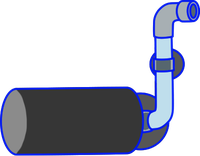
The breed matters less than the water. Every fish on this page thrives in the same simple setup, and most first-year deaths come from getting this part wrong rather than from anything about the individual fish.
- Give them water volume. Aim for at least 5 gallons (about 20 L) per goldfish, which in practice means a tank in the 20-gallon (75 L) range or larger, not a bowl. Goldfish produce a lot of waste and need the dilution.
- Run a filter. A sponge, box or hang-on filter all work; the point is biological filtration, running around the clock.
- Dechlorinate every drop. US tap water is chlorinated (and often chloraminated); treat it before it touches the fish.
- Feed less than you think. Small amounts, more often, is the rule. Overfeeding is the number-one killer of beginner goldfish, and it hits the round breeds hardest through digestive and swim-bladder trouble.
- Keep the temperature steady. Goldfish are cold-tolerant, but sudden swings stress them. Avoid heaters near windows and rapid water changes with a big temperature gap.
Get those five right and a hardy goldfish is one of the longest-lived pets in the freshwater hobby: well kept, a common goldfish can outlast a dog. If a fish does fall ill, the traditional Japanese first response is a salt bath before any medication (see our salt bath guide).
FAQ
- Q. Which goldfish is best for an absolute beginner?
- A. A slim wakin-type fish: the common goldfish (No. 2), the sarasa common goldfish (No. 1) or the comet (No. 3). They are the hardiest, they resist the digestive problems that trouble round breeds, and they forgive the small water-quality mistakes every beginner makes. Start with one type, in a tank with room to spare, and keep the numbers low until you have the routine down.
- Q. What do I actually need to keep one alive?
- A. A tank holding at least 20 gallons (75 L) for the first fish, a filter (sponge, box or hang-on), a dechlorinator for tap water, a thermometer, and a gravel or tank cleaner for maintenance. Goldfish are heavy waste producers, so plan on regular cleaning and partial water changes, and avoid sudden temperature swings.
- Q. Why does everyone say not to overfeed?
- A. Because overfeeding, not disease, kills most first goldfish. Feed small amounts more often; an amount that looks too small is usually right. The deep-bodied round breeds are especially prone to digestive blockage and swim-bladder trouble from too much food. To grow a fish larger, feed lightly but frequently and keep the water around 73 to 77 °F (23 to 25 °C) with plenty of tank volume, rather than piling on food.
- Q. My goldfish looks sick. What do I do first?
- A. The Japanese first step is a salt bath: move the fish to clean water at about 0.5 percent salt, then add medication only if symptoms call for it. Most illness traces back to water quality (poor cleaning), temperature instability, or digestive trouble from overfeeding, so review the environment at the same time. Our salt bath guide walks through concentration, timing and how to return the fish to normal water.