Swim Bladder Disorder in Goldfish: The Digestion Link
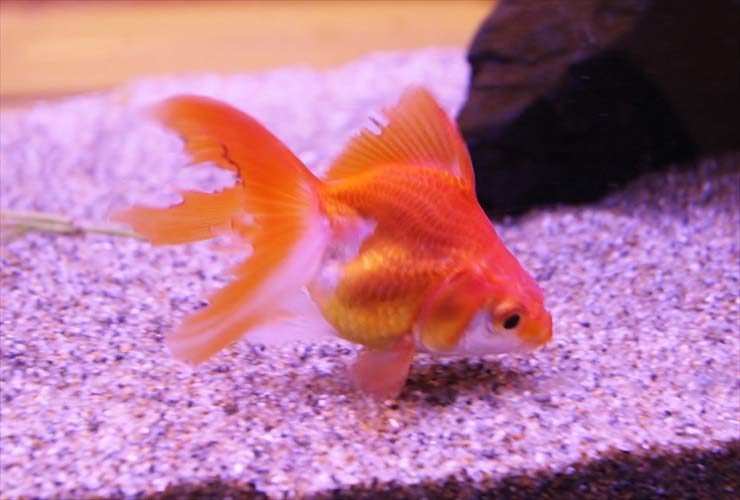
A goldfish that floats helplessly at the surface, or bobs back up every time it tries to dive, gets called "swim bladder disorder" in English, a name that blames one organ. In Japan we name the condition by what you actually see: tenpuku-byō (転覆病), "capsizing disease." The Japanese name is the more useful diagnosis, because in most acquired cases the swim bladder is the victim, not the culprit. The trouble usually starts in the gut: indigestion and constipation trap gas that adds buoyancy and presses on the swim bladder.
That difference in naming leads to a difference in treatment. The default American home remedy is an epsom salt bath. The Japanese default is quieter: stop feeding, warm the water, and let the fish's own digestion clear the blockage. This guide covers both directions of the disease, floating and sinking, following one of the most-read goldfish health articles on our Japanese site.
- Most acquired cases begin as indigestion: gas in the intestine blocks elimination, adds buoyancy, and presses on the swim bladder. Old food and overfeeding are the usual triggers.
- Caught early, a fast of about 3 days plus a switch to fresh, easily digested, plant-leaning food often brings a floating fish back.
- Digestion runs on water temperature. Aim for 73–77°F (23–25°C); in cold or unstable seasons a heater keeps the gut working.
- Round-bodied fancy goldfish (ryukin, oranda, ranchu types) capsize far more often than the slim wakin (和金) body type.
- There is no reliable cure once the disease is established, so daily prevention is the real treatment: measured feeding, clean substrate, stable temperature.
Quick Diagnosis: What You See vs. What It Means
Watch the fish, and its droppings, for a few minutes before you change anything.
| What you see | Most likely meaning | First move |
|---|---|---|
| Fish tilts or floats a while after eating, breathing normally | Floating type, driven by indigestion | Fast for about 3 days; hold 73–77°F (23–25°C) |
| Dives, then pops right back to the surface | Very early floating type | Best treatment window: fast and warm now |
| Poop is clear and jelly-like, white, pale, gas-bubbled, or trailing 1 inch (2.5 cm) or more | Indigestion or constipation brewing | Replace old food; switch to easily digested, plant-based food |
| Part of the back or belly sits above the waterline | Drying emergency on top of capsizing | Keep the skin submerged (see emergency care below) |
| Fish lies on the bottom and struggles to rise or eat | Sinking type: bladder damage, congenital, or a worsened floating case | Shallow water, weak current, patient management |
| White spots, frayed fins, or redness alongside the balance problem | A separate infection is involved | Treat the infection; see our fin rot guide |
What Capsizing Disease Is
Tenpuku-byō is a loss of buoyancy control: the goldfish can no longer manage the swim bladder that keeps it level. It comes in two directions, floating and sinking, and two origins:
- Congenital — the swim bladder, normally divided into a front and rear chamber, never formed completely. These fish usually sink; the organ itself cannot be repaired.
- Acquired — the far more common form, typically following a bout of indigestion. These fish usually float.
Both forms hit round-bodied fancy goldfish hardest; the compressed body plan leaves the organs crowded. To be honest about the science: the full mechanism is not settled, and other causes are suspected, including balance-sense damage and intestinal Aeromonas infection. What the keeping side sees consistently is the pattern: digestive trouble first, capsizing after. That link is where a keeper has leverage.
The Floating Type
Symptoms
The fish tips sideways or fully belly-up and drifts at the surface, breathing normally. Diving takes visible effort, and the fish rises again the moment it stops swimming. In mild cases the floating shows up mainly a little while after feeding, once digestion begins: strong evidence that the gut is driving the problem.
Read the Poop First
Japanese keepers repeat a blunt rule: goldfish keeping is poop watching. A healthy dropping is short and dark. A fish heading toward capsizing produces droppings like these:
- Clear and jelly-like
- White, or noticeably pale
- Carrying visible gas bubbles, or floating
- Stringy and long, 1 inch (2.5 cm) or more
One caveat: a fish just moved to a new tank, or one that has not eaten for days, also produces thin clear droppings from an empty gut; that alone is not disease. But gas-filled or floating droppings mean gas is forming inside the intestine. A fish that can still expel that gas and level itself off is at the mildest, most recoverable stage. Act now, not later.
The Japanese Fix: Fast, Then Warm
The treatment follows directly from the cause. If gas from indigestion is inflating the fish, the goal is to rest the gut and help it push everything out.
Step 1: fast for about 3 days. No food at all. A healthy-weight goldfish handles this easily, and an empty, resting intestine can finally clear the backed-up gas and waste. Chronic cases may need a month or more of adjustment, but three days is the standard opening move.
Step 2: warm the water to 73–77°F (23–25°C). Goldfish are cold-blooded; their digestive power is set by water temperature. Digestion works adequately from about 64°F (18°C), but recovery is fastest in the low-to-mid 70s°F. In winter, and in the unstable weeks of spring and fall, an adjustable heater holds the gut at working temperature. One strict limit for a fish already capsizing: change the temperature no faster than about 2°F (1°C) per day. A sudden swing is its own shock.
Step 3: refeed from one pellet. Do not return to normal portions after the fast. Start with literally a single pellet, watch the droppings, and increase only while they stay healthy. Choose food that digests easily: fresh, not from a year-old opened container, and plant-leaning. Flake foods, probiotic formulas with added gut bacteria, and plant matter such as chlorella and spirulina all have a track record here, and a sinking pellet spares a floating-prone fish from gulping air at the surface.
Emergency Care: Keep the Skin Wet
A badly floating fish has a second problem: part of its body sits above the waterline. Exposed skin dries out, the protective mucus coat stops working there, and the patch can ulcerate and invite bacterial infection. The field fix is crude but effective: hold the body underwater with something water-permeable, such as a mesh breeder net or a plastic basket turned upside down over the fish. It looks rough, but it beats letting the back dry out while you treat the gut.
If the early window has passed, our salt bath guide includes the specific protocol Japanese keepers use for early capsizing: a 2–3 day fast, water held at 77–82°F (25–28°C), and one week at 0.5% salt. The dosing and water-change routine matter, so we refer you there rather than summarize.
The Sinking Type
The reverse presentation also counts as tenpuku-byō: the goldfish sits on the bottom, often tipped over, and cannot swim up. Causes are more varied than the floating type, with no established cure: damage to the swim bladder itself, a floating case that worsened until trapped gas crushed the organ, congenital underdevelopment, and, in deep tanks, chronic water pressure on the bladder.
One honest consolation: a sunken fish's skin stays underwater, so the drying and infection that threaten floaters never develop, and sinking-type fish tend to live longer. Care is management, not cure:
- Keep the water shallow. Less depth means less pressure and a shorter trip to the surface. A water depth of 12–14 inches (30–36 cm) is plenty; breeders keep ranchu, the most delicate fancy breed, in wide, shallow, open-topped tanks for exactly this reason.
- Keep the current weak. Round-bodied goldfish are poor swimmers even when healthy, and a strong filter outflow exhausts a capsized one. Sponge filters, internal box filters, and gently tuned hang-on-back filters suit goldfish; a wide footprint preserves water volume without adding depth.
- Keep digestion easy. The same feeding rules as the floating type. A fish that cannot reach food may need it dropped directly in front of it.
Prevention Is the Actual Cure
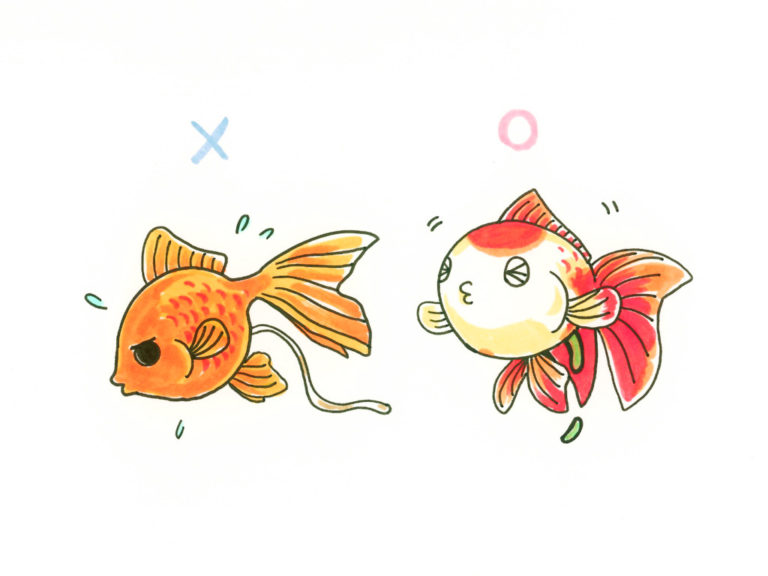

Because established capsizing disease has no dependable cure, the serious work happens before symptoms exist. None of it is exotic; it is ordinary good goldfish keeping done consistently, because a stable environment is the strongest medicine a stress-sensitive fish can get.
- Feed measured amounts of fresh food, and never "one more pinch." Overfeeding is the most common trigger, and digestion is famously the weak point of an otherwise tough fish.
- Hold the temperature steady in the 73–77°F (23–25°C) band when possible. There is a second reason for that number: the harmful bacteria always present in tank water, Aeromonas and Columnaris, are most active around 79°F (26°C), almost exactly where goldfish are most active too. Staying a few degrees below that peak favors the fish over its pathogens; in our own work, lowering a tank from 79°F to 73°F (26°C to 23°C) once coincided with a fin rot recovery.
- Clean the substrate and filter regularly. Dirty gravel and clogged filter media are where gut-infecting bacteria build their numbers. A weekly pass with a gravel vacuum during the water change covers both.
- Avoid the stress list: overcrowding, scrapes from rough decor, deteriorating water, excessive lighting. Stress lowers immunity, weakened fish stop digesting well, and the loop feeds itself.
If the skin or fins show clear symptoms alongside the balance problem, treat that infection with a proper medicated bath; since 2023, FDA rules have moved many over-the-counter fish antibiotics behind veterinary oversight in the US, and our fin rot guide covers what is still available. And keep perspective: a well-kept goldfish is a 10-year-plus companion. The daily habits above are what buy those years.
FAQ
- Q. What exactly is swim bladder disorder, and is it fatal?
- A. It is the loss of buoyancy control, floating or sinking, that Japanese keepers call tenpuku-byō, capsizing disease. It is rarely an immediate death sentence: sinking-type fish often live a long time with care, and mild floating cases can recover outright. The dangerous complication is drying and infection of exposed skin in floaters, which is why emergency submersion matters.
- Q. Is it really caused by constipation and indigestion?
- A. Not in every case, but in most acquired cases the chain starts there: unsuitable or stale food produces gas in the intestine, the gas blocks elimination and adds buoyancy, and the fish begins to tip. Affected fish almost never have healthy droppings, so watch for clear, white, gas-filled, floating, or unusually long poop. Bacterial infection and balance-sense damage are suspected in other cases; congenital cases exist from birth.
- Q. How long should I fast the fish, and is fasting safe?
- A. About 3 days is the standard, and it is safe: a healthy-weight goldfish tolerates one to two weeks without food. Fasting rests the intestine so it can expel the trapped gas and waste. Afterward, restart from a single pellet and increase slowly while the droppings stay normal; a chronic case can need a month or more of this adjustment.
- Q. What water temperature prevents capsizing disease?
- A. Aim for 73–77°F (23–25°C). Digestion functions adequately above about 64°F (18°C) but is strongest in the mid 70s°F, while the common pathogenic bacteria peak slightly higher, around 79°F (26°C). Goldfish live fine year-round without a heater, but a fish prone to indigestion or already tipping benefits from steady warmth, changed no faster than about 2°F (1°C) per day.