How to Dechlorinate Tap Water: Chlorine vs Chloramine
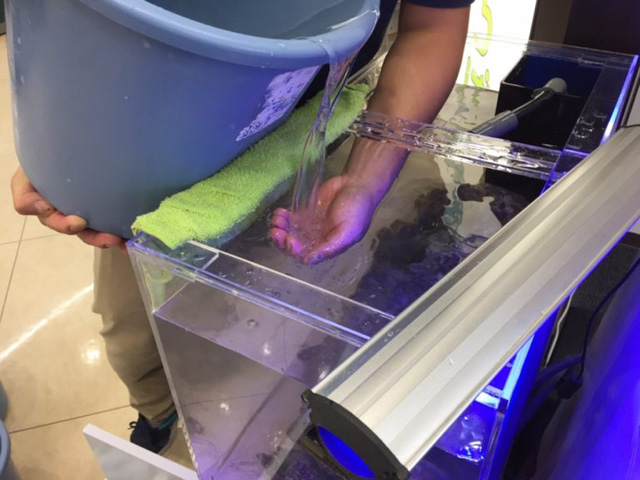
Every water change starts with the same small decision: what do you do about the tap water before it touches your fish? In Japan we call the disinfectant in tap water karuki (カルキ), and removing it is karuki-nuki (カルキ抜き), the first thing any beginner learns. The chemistry that makes tap water safe for people is the same chemistry that burns fish gills and kills the filter bacteria you spent weeks growing.
There is one detail that trips up American fishkeepers more than any other, and it is the reason this guide exists. Japanese tap water is disinfected with plain chlorine, which is easy to remove. A great deal of US tap water is disinfected with chloramine instead, and chloramine does not behave the same way. The old advice to let a bucket sit in the sun for a day, which works in Japan, quietly fails on chloramine. Get this one point right and the rest is simple.
- Always remove chlorine before it reaches the tank. It stings fish gills and slime coat and kills beneficial filter bacteria.
- Find out whether your utility uses chlorine or chloramine first. Your water provider's annual report tells you, and it changes which methods work.
- Standing water in the sun and boiling remove chlorine but not chloramine. If your water is chloramine, these low-cost methods will let you down.
- A liquid conditioner is the reliable fix for both. Choose one rated for chloramine, such as Seachem Prime; it works in a few minutes.
- Match the temperature too. Dechlorinated water still shocks fish if it is colder or warmer than the tank.
- Treated water spoils, so mix only what you need and use it promptly.
What Is in Your Tap Water, and Why It Harms Fish
Water utilities add a disinfectant to keep drinking water free of bacteria. In Japan the standard is a minimum of 0.1 milligrams per liter (0.1 ppm) of residual chlorine, a trace that is harmless to people. Fish, shrimp, and snails have far less tolerance. Chlorine irritates the gills and the protective slime coat, and because it is designed to kill microbes, it also wipes out the nitrifying bacteria in your filter that convert toxic ammonia into safer compounds.
A splash of untreated tap water in a large tank does little harm. The danger is a real water change, where a big volume of chlorinated water swings the tank chemistry all at once. That is why every source below exists: to get the chlorine, or chloramine, out before the water goes in.
One more thing worth knowing: once you neutralize the disinfectant, the water loses its protection against microbes and begins to spoil. Treated water is not something to store. Mix what you need for the change and use it.
Chlorine vs Chloramine: The Difference That Changes Everything
This is the section US readers cannot skip. Chlorine is a gas dissolved in water; it is unstable and leaves on its own if you give it time or agitation. Chloramine is chlorine bonded to ammonia. Utilities switched to it precisely because it is more stable and lasts longer in the pipes, which is good for public health and bad for the shortcut methods. Chloramine does not gas off in a day of sunshine, and boiling does not reliably drive it out.
How to Find Out Which One You Have

You do not have to guess. In the US, every community water system publishes an annual water quality report, the Consumer Confidence Report (CCR), usually mailed or posted online by July each year. It states the disinfectant used. Search your city or utility name plus "water quality report," or call the number on your water bill and ask a single question: chlorine or chloramine. Whichever it is, the conditioner route below covers you; the free methods only cover plain chlorine.
| Chlorine | Chloramine | |
|---|---|---|
| What it is | Dissolved chlorine gas | Chlorine bonded to ammonia |
| Common where | Japan; parts of the US | Many US metro systems |
| Sun / standing water | Works (hours to days) | Does not reliably work |
| Boiling | Works | Not reliable |
| Liquid conditioner | Works in minutes | Works, if rated for chloramine |
The Methods, and How Long Each Takes
There are several ways to remove chlorine. Below they run roughly from cheapest to most involved, with the honest time cost and the chloramine caveat for each.
Standing Water in the Sun
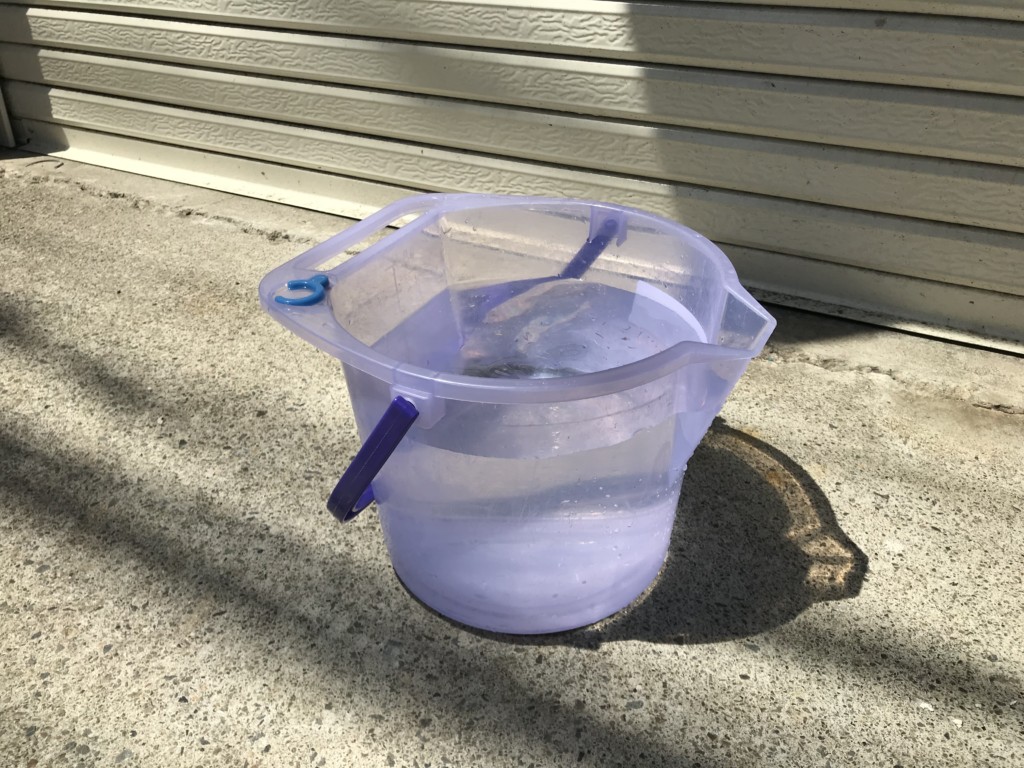
The oldest method, and the one that needs no equipment: fill a wide-mouthed bucket, set it where sunlight and air can reach it, and wait. Ultraviolet light and off-gassing carry the chlorine away, and the warmth speeds it along.
Timing depends entirely on sun and temperature. Outdoors on a clear early-summer day, about 15 liters (4 gallons) can be chlorine-free in two hours to half a day; a hot sunny afternoon can finish in one to two hours. Indoors, expect two to three days. In cold or cloudy weather, plan on twelve hours to more than a day. The weakness is that you are trusting your judgment, not a measurement, so a residual chlorine test kit is worth keeping. Cover loosely or skim before use, since debris and heavy rain both foul an open bucket.
Boiling
Heat drives dissolved chlorine out of water. Boil uncovered for at least 15 minutes, or 20 minutes or more for a larger pot. Boiled water is low on dissolved oxygen afterward, so pour it into a bottle and shake, or aerate it, before it goes near fish. The obvious limit is volume: you can only treat as much as your pot holds, which suits top-offs and small-tank changes, not a full water change on a big tank.
An electric kettle can do it, but many modern kettles shut off the instant they reach a boil, which is too brief to finish the job, especially in summer when utilities raise disinfectant levels. If you use a kettle, pick one with a dechlorinating mode that keeps boiling, or re-boil a second time.
Liquid Water Conditioner (Our Recommendation)

This is what professional shops use and what we reach for first. A liquid dechlorinator, sold at any US pet store, neutralizes the disinfectant almost instantly: add the labeled dose to your bucket of tap water and it is ready in two to three minutes. It is the fastest, most consistent, and most forgiving option, and unlike the free methods it works on chloramine, provided you buy the right bottle.
The active ingredient in basic dechlorinators is sodium thiosulfate. Cheap tablet or crystal forms exist and remove chlorine fine, but they take longer to dissolve and, more importantly, plain chlorine removers are not enough for chloramine. For chloramine you need a conditioner that says so on the label and that also handles the ammonia released when the bond breaks. Products like Seachem Prime are formulated for exactly this; many liquid conditioners also add a slime-coat protectant, giving you dechlorination and a mild water conditioner in one step.
Two rules: never overdose, since these chemicals are not harmless in excess, and never use a bottle that smells strongly of sulfur, which means it has degraded. Follow the dosing on the label to the drop.
Aeration
If you would rather not add chemicals but want to avoid the debris that an open sun bucket collects, run an air pump and air stone in a filled container. The moving water off-gasses chlorine steadily and stays fresher than still water. Depending on volume it takes about two to three days, the slowest of the practical methods but a safe, chemical-free one. Choose a pump matched to your water volume, since weak aeration can leave chlorine behind past three days, and check with a test kit to be sure. Use a deep enough container, because vigorous aeration splashes.
Activated Carbon

Charcoal, such as hardwood lump or bamboo charcoal, adsorbs chlorine and other impurities and can be used for both drinking and aquarium water. Drop it in a container and leave it at least five hours indoors; sunlight speeds it up. It is a supporting method rather than a primary one, since it is not specialized for chlorine and is not especially efficient, and the charcoal itself needs replacing about monthly. For a single bucket, standing water or a conditioner is simpler. Note that carbon filtration is one of the few passive methods that can reduce chloramine given enough contact time, though a conditioner remains far more reliable.
Aquarium Water Purifiers and RO Units
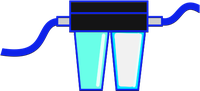
For heavy water changes, an aquarium purifier that connects to the tap produces dechlorinated water on demand, cost-effective if you keep large fish or many tanks. At the high end, a reverse-osmosis (RO) unit strips chlorine, chloramine, heavy metals, and more, yielding near-pure water prized for marine tanks and corals. RO comes with real trade-offs: a purchase price starting well above 100 dollars, wasted reject water that raises your water bill, filter cartridges to replace every six to twelve months, and water so pure it has no minerals, which means remineralizing for freshwater fish and plants. A typical unit makes about 23 liters (6 gallons) per hour, so you fill your storage the day before. For most hobbyists doing normal water changes, this is more machine than the job needs.
Don't Forget Temperature
Removing the chlorine is only half the job. Water that is the right chemistry but the wrong temperature still shocks fish. After a cold-weather standing-water session your bucket will be colder than the tank, so warm it with a heater, or blend in a little hot water, before pouring. When you use a conditioner, simply mix hot and cold tap water to the tank's temperature, then dose. Check with a thermometer; experienced aquarists judge it by hand, but in seasons with a big gap between tap and tank, measure rather than guess.
What About Mineral or Bottled Water?
Bottled and mineral water are disinfected differently and contain no chlorine, so they need no dechlorinating. That does not make them a good tank water, though. Much bottled water, especially imported brands, is hard water, which suits neither the many soft-water tropical fish nor most fancy goldfish, and the running cost is impractical for anything but a tiny volume. Treat bottled water as an emergency top-off when you cannot dechlorinate, and only after checking that its hardness fits your fish, not as a routine source.
FAQ
- Q. How do I know if my tap water has chlorine or chloramine?
- A. Check your utility's annual Consumer Confidence Report (CCR), published each year and available online or by mail, which names the disinfectant used. Or call the number on your water bill and ask. This one fact decides whether the free methods will work for you, so it is worth two minutes.
- Q. Can I just let tap water sit overnight before a water change?
- A. Only if your water is plain chlorine, and even then a full day in cool or indoor conditions is safer than a single night. If your utility uses chloramine, sitting water will not remove it at all. When in doubt, a chloramine-rated liquid conditioner is the sure route.
- Q. How long does dechlorinating take?
- A. A liquid conditioner works in two to three minutes. A crystal or tablet remover takes roughly 20 to 30 minutes to dissolve depending on temperature. Standing water and aeration take about two to three days, longer in cold weather, and remove chlorine only.
- Q. Is it fine to use plain tap water for a small top-off?
- A. A little untreated water added to a large, established tank usually causes no harm, since the volume is small relative to the tank. The rule matters most on real water changes, where a large share of the water is replaced and untreated chlorine can swing the whole tank. When practical, condition even top-off water.