Medaka Care: The Complete Guide to Japanese Rice Fish
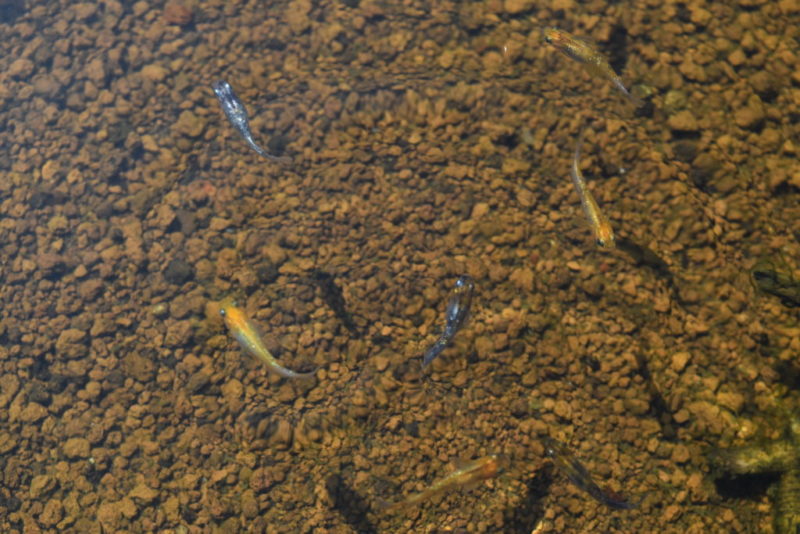
In Japan we do not say "rice fish." The fish is a medaka (メダカ), and it is often the first fish a Japanese child ever keeps: a small, cheerful native that still swims in rivers across the country and is hardy enough to live on an apartment balcony through all four seasons. Breeders here have turned it into more than 450 named varieties, and keeping them has grown into a national hobby. In the United States, the same fish is sold as the Japanese rice fish, or simply ricefish.
Medaka may be the easiest entry into fishkeeping there is, but easy still has rules. This guide covers the whole path: choosing fish, setting up indoors or outdoors, treating American tap water, feeding, routine care, the seasons, and what to do when eggs appear. Where a topic deserves a full article of its own, we link to one.
- Medaka are genuinely hardy: clean water, light, and modest feeding give them a lifespan of one to five years.
- The Japanese stocking rule: about one quart (1 liter) of water per fish, as a ceiling. Fewer fish is always easier.
- Indoors, run a gentle filter and 10–13 hours of light a day. Outdoors, plants and a cleanup crew do the filter's job.
- US tap water needs a conditioner. If your utility uses chloramine, letting water sit in the sun removes nothing.
- Feed only what the fish finish in about 3 minutes. Overfeeding is the classic beginner mistake.
- Breeding starts once water passes 73°F (23°C). Separate the eggs, or the parents will eat them.
Meet the Medaka: Japan's Favorite Native Fish

The medaka (Oryzias latipes) evolved with Japan's climate, which swings from freezing winters to subtropical summers. That history is why the fish is so forgiving: it tolerates a wider temperature range than most aquarium species and needs no heater at normal room temperatures. Expect one to five years of life depending on environment and variety; fish kept in near-natural conditions, with real sunlight and a seasonal rhythm, tend toward the long end.
Wild medaka are plain brown, and biologists now treat the wild populations as two species, the Northern and the Southern medaka. Nearly everything in the trade, though, is a kairyo medaka (改良メダカ), an "improved" medaka: a line selectively bred and fixed for body color, fin shape, body shape, or sparkle. The vivid orange Yokihi, the platinum-backed Miyuki, glittering lame-scaled types, long-finned swallows, round-bodied darumas. If you want to know what the names mean and which types suit a beginner, start with our guide to medaka varieties.
When you buy, judge condition before color. A good medaka swims actively, holds its fins open, has a full and slightly rounded belly, and carries no wounds or fin damage. In the US you will rarely see them in chain stores; search under "ricefish" and you will find specialist breeders who ship, along with local keepers trading fish on hobby forums.
Indoor Tank or Outdoor Container? Pick Your Path
Japan keeps medaka two ways, and this one decision shapes everything you buy afterward. An indoor aquarium puts the fish at eye level in your living room, runs on a filter and an LED light, and stays stable all year. An outdoor container pond recreates a small piece of pond life: plants and helper animals keep the water clean instead of a filter, and the fish live with the weather, which is both the charm and the work of it.
| Indoor aquarium | Outdoor container | |
|---|---|---|
| Core gear | Tank, filter or air pump, LED light | Weatherproof container, plants, cleanup crew |
| Water care | Partial change every 1–3 weeks | Mostly topping off evaporation |
| The view | From the side, up close | From above, the traditional way |
| Breeding season | Possible year-round | Spring through fall |
The rest of this guide covers both paths.
Setting Up an Indoor Medaka Aquarium
What You Need
- A tank. Size it by the Japanese stocking rule: about one quart (1 liter) of water per fish, treated as a maximum. Any tank wider than 12 inches (30 cm) should sit on a dedicated aquarium stand, because ordinary furniture may not bear the weight of water.
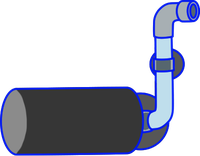
- Filtration and aeration. An air pump with a sponge filter, or a small hang-on filter, keeps water clear between changes. Keep the flow gentle; medaka are surface fish, not current swimmers.
- An LED light on a timer. Run it 10–13 hours a day and switch it off at night. Light stands in for sunlight, and a clear day-night rhythm keeps a medaka's body clock in order.
- Substrate and plants. A bare tank works, but sand or fine gravel plus live plants gives cover, steadies the water, and gives eggs somewhere to land.
Setup in Four Steps
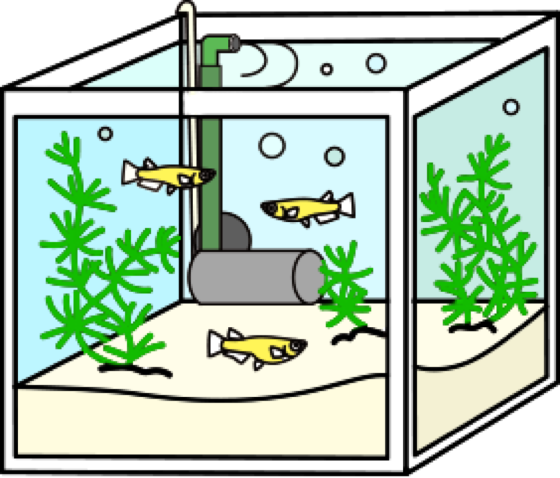
- Place the tank on a level, sturdy surface away from long hours of direct sun. An uneven or flimsy base is a hazard once the tank is full.
- Prepare the substrate. Scrub-rinse sand or gravel until the rinse water runs clear; this is what keeps the tank from clouding on day one.
- Arrange plants and equipment. Keep bulky decor away from the filter outflow so water can circulate, and leave open swimming room near the surface, where medaka spend their time.
- Fill with conditioned water, start the filter, and add the fish only after acclimating them. The acclimation ritual is below.
Good Plants for an Indoor Tank
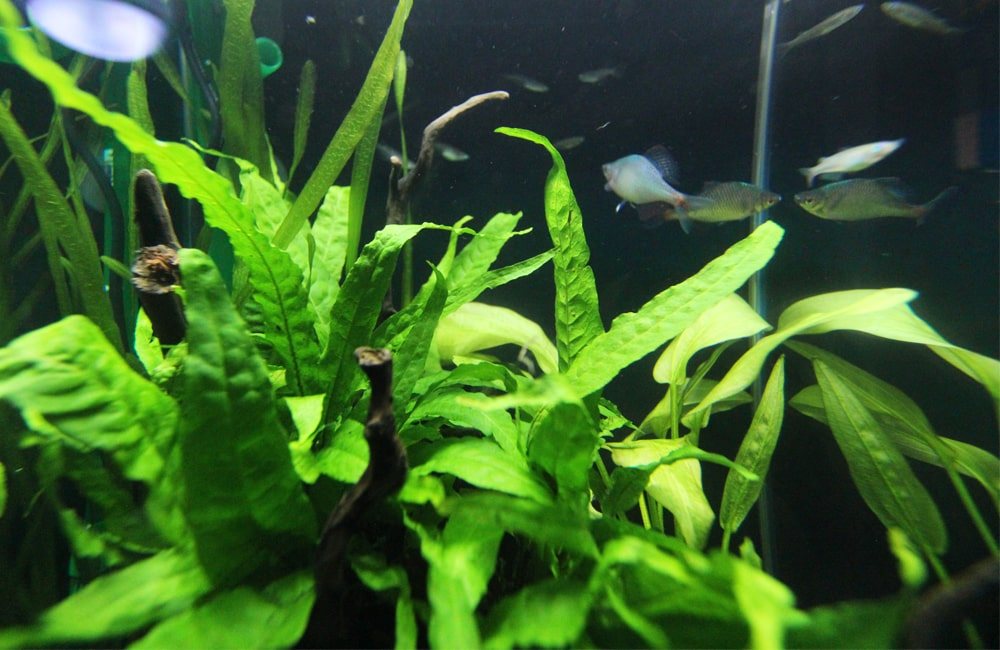
The classic Japanese picks are all sold in the US: hornwort, which we call matsumo (マツモ), a soft floating stem plant medaka love; anacharis (アナカリス), nearly indestructible; willow moss (ウィローモス); and Anubias nana, which handles low light. One caution: buy pesticide-free plants. Residue a medaka shrugs off will kill the shrimp that many keepers add as cleaners.
American Tap Water: Chlorine vs Chloramine
Tap water must be dechlorinated before it touches fish, indoors or out. The Japanese folk method is to let water stand outside in sunlight for a day or two until the chlorine gasses off; the modern method is a liquid conditioner. In the US, read this before trusting the bucket-in-the-sun trick:
Adding the Fish: Mizu-awase
Medaka are tough once settled but handle sudden change poorly, so Japanese keepers never pour a new fish straight in. The ritual is called mizu-awase (水合わせ), "water matching," and it applies to indoor and outdoor setups alike:
- Float the unopened bag in the tank for about 20 minutes to equalize temperature.
- Move the fish and the bag water to a bucket, then add a little tank water every 10 minutes for about 30 minutes so the fish adjusts to your water chemistry.
- Net the fish into the tank, leaving the bag water behind.
The Outdoor Container Pond
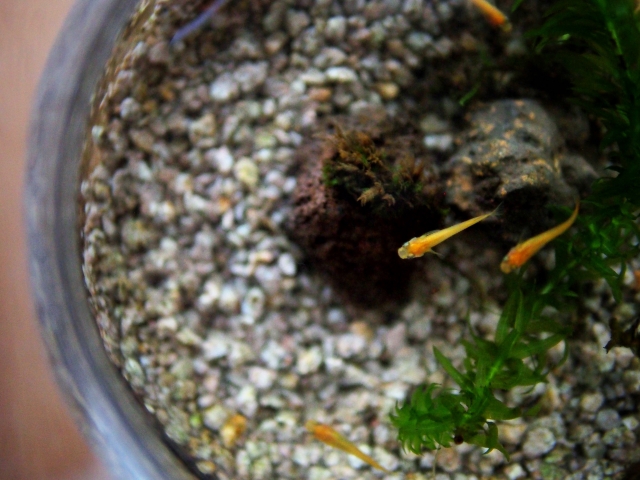
Outdoors, the standard Japanese containers are a glazed ceramic bowl called a suiren-bachi (睡蓮鉢), a thick styrofoam box, or a torofune (トロ船), the mortar-mixing tub that breeders buy from hardware stores. In the US, a whiskey-barrel planter liner or a small stock tank fills the same role. Whatever you choose, make sure it is rated for outdoor use; a container that cracks with age is a flood waiting to happen.
Pick a spot with good airflow and some sun, but not all-day direct sun, which overheats small volumes of water and feeds algae. Fill with conditioned water, add substrate and plants, and stock lightly: 2 or 3 fish for the first month, adding more only after the water has stabilized. There is no filter. The pond cleans itself through a cycle in which microbes break waste down and plants absorb the results, helped by a cleanup crew of small shrimp, loaches, or trapdoor snails that eat leftover food and droppings.
Floating plants matter most out here: they shade the water, give the fish cover, and serve as spawning sites. The Japanese favorite is water hyacinth, hotei-so (ホテイソウ), with its trailing root curtain.
Two weather rules cover most outdoor emergencies. First, heat: once water passes 93°F (34°C), medaka weaken quickly, so shade the container on hot days. The Japanese tool is a sudare (すだれ), a rolled reed screen leaned over the pond in summer and wrapped around it for insulation in winter. Second, rain: a hard storm can chill the water or overflow the container, fish included, so cover it or move it under an eave when the forecast turns. And if the water turns green, that is usually good news: it is green water, a live phytoplankton culture that medaka graze on all day. For container choice, layout, and stocking in full detail, see our Japanese container pond guide.
Feeding: Small Fish, Small Meals

Medaka are omnivores with small, upturned mouths built for surface feeding. Three kinds of food cover every situation:
| Food | Notes |
|---|---|
| Medaka pellets or crushed flakes | The staple. Granule and powder grades exist for each life stage; Japanese brands such as Hikari are widely sold in the US |
| Zooplankton | Daphnia and cultured paramecium, the live foods serious breeders raise at home for growth and conditioning |
| Green water | Phytoplankton-rich water that works as a self-serve buffet, most valuable for fry |
Adults eat once or twice a day, and the portion rule never changes: only what the whole school finishes in about 3 minutes. Overfeeding hurts twice, first as indigestion, then as rotting leftovers that foul the water. When in doubt, feed less.
Fry are the opposite case: they need 4 or 5 tiny meals a day because everything they eat goes into growth, and they starve fast when food runs out. Raising them is a subject of its own; our medaka fry guide covers first foods, containers, and sorting fry by size as they grow apart.
Routine Care: A Few Minutes a Week
Indoors, change part of the water every 1 to 3 weeks and clean the tank every week or two: scrape algae from the glass, siphon droppings and leftovers out of the substrate, and rinse or replace filter media once the flow weakens. Judge the pace by your own tank, since more fish and heavier feeding mean shorter intervals, and never deep-clean everything at once; overcleaning stresses fish as much as dirt does.
Outdoors there is even less to do: top off evaporation with conditioned water, thin overgrown plants, and let the cleanup crew work the bottom. In both setups the real daily maintenance is looking. A fish that hangs listlessly, hides, or ignores food is telling you something days before any visible disease appears.
Medaka Through the Seasons
Part of the appeal of medaka is that they live by the calendar. Here is the year at a glance, mainly for outdoor keepers:
| Season | What happens | What to do |
|---|---|---|
| Spring | Fish wake, appetite returns, spawning begins once water holds above 73°F (23°C) | Resume feeding gradually; add spawning plants |
| Summer | Peak activity and peak risk; water above 93°F (34°C) weakens fish | Shade the container; watch small water volumes closely |
| Fall | Spawning winds down as water cools | Start winter preparation months before the first freeze |
| Winter | Outdoor medaka go dormant near the bottom | Insulate the container and mostly leave them be |
Indoors, the seasons flatten out: stable temperatures mean steady feeding and even year-round spawning. Outdoors, a natural dormant winter is thought to complete the fish's yearly cycle, and medaka allowed to overwinter this way often live longer than fish kept warm forever. Dormancy demands preparation and know-how, though; read the wintering section of the container pond guide before your first cold season.
Health: When Something Looks Wrong
Kept in clean water, medaka rarely fall ill; most disease is a symptom of the environment rather than bad luck. The prevention list is everything covered above: modest stocking, modest feeding, scheduled water changes, and a stable light cycle. One variety-specific note: short-bodied daruma types are prone to indigestion and generally more delicate, so be extra careful with their portions.
When a fish does look wrong, hanging near the bottom, gasping, or thinning, act early. Our diagnostic guide, Why Do My Medaka Keep Dying?, works through the common causes one by one, from starvation and heat to oxygen shortage and disease, with a fix for each.
Breeding: Where the Hobby Gets Addictive

Keep males and females together through a warm season and you will find eggs. Medaka breed once water stays above 73°F (23°C): from spring to late fall outdoors, or almost any time in a temperature-stable indoor tank. Three conditions decide whether it happens:
| Condition | Target |
|---|---|
| Water temperature | 73–81°F (23–27°C) |
| Spawning site | Floating plants such as hornwort or water hyacinth, or a yarn spawning mop |
| Sex ratio | About 1 male to 2 females |
Sexing is easier than it sounds. A male's dorsal and anal fins are large and angular, with a notch in the rear edge of the dorsal fin; a female's fins are smaller and rounded, and her belly is fuller. Females carry the fertilized eggs beneath the body for a while, then wipe them onto plants near the surface.
Then comes the one rule that decides your success: separate the eggs. Adult medaka eat their own eggs and fry without hesitation, so move egg-laden plants or mops to their own container. From there, two dedicated guides take over: how to hatch medaka eggs, with the 10–14 day timeline and fungus prevention, and the fry guide linked above for everything after hatching.
FAQ
- Q. How many medaka can I keep in a 5-gallon tank?
- A. The Japanese rule of thumb is about one quart (1 liter) of water per fish, which makes a 5-gallon (19 L) tank the ceiling for roughly 18 fish. Treat that as a maximum, not a goal: a group of 5 or 6 is easier to keep clean and leaves room for fry.
- Q. Do medaka need a heater or a filter?
- A. No heater at normal room temperatures; medaka evolved with Japan's seasonal swings, and summer heat above 93°F (34°C) is a bigger threat than ordinary cold. Indoors, a gentle filter is recommended. Outdoor containers skip the filter and rely on plants and a cleanup crew instead.
- Q. Where can I buy medaka in the US?
- A. Search under "ricefish" or "Japanese rice fish." Chain pet stores rarely stock them, but specialist breeders sell online and ship, and hobby forums often have local keepers with extras.
- Q. Can medaka stay outside through an American winter?
- A. In Japan, outdoor medaka overwinter dormant near the bottom of the container, and fish allowed this natural cycle often live longer. But wintering takes preparation starting months ahead, plus careful handling when they wake, so read up first.
- Q. My medaka keep dying one by one. What is the most likely cause?
- A. Usually the environment: water fouled by overfeeding, summer heat, oxygen shortage, or plain starvation in an undersized setup. Work through the causes in order with our diagnostic guide, Why Do My Medaka Keep Dying?, linked above.