How to Culture Green Water: Japan's Fry-Raising Method
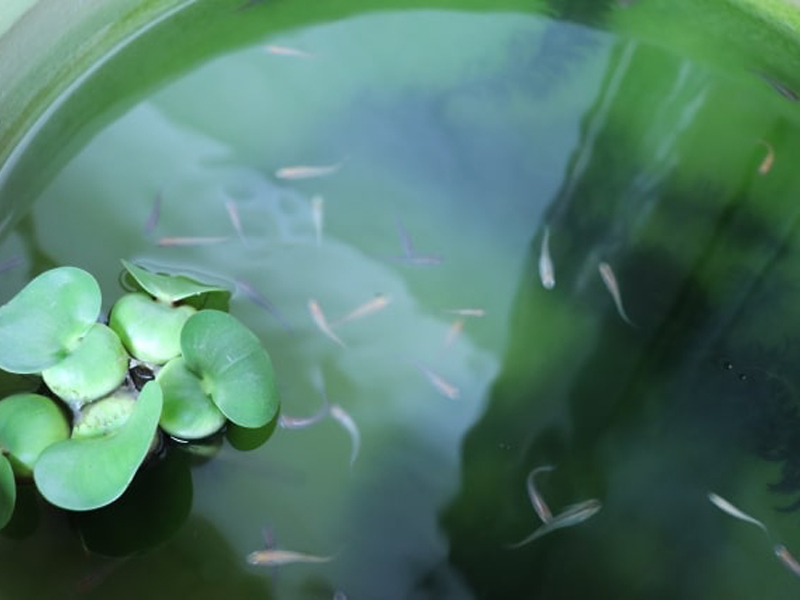
To most aquarium keepers, green water is a problem: a pea-soup tank you want cleared out. In Japan it is that too, but it is also something else: a tool. Breeders here grow green water on purpose to raise the fry of medaka (Japanese rice fish) and goldfish, because it surrounds tiny fish with food around the clock. They call it aomizu (青水, literally "blue water").
So before anything else, one quick fork in the road. If green water appeared in your tank uninvited and you just want it gone, that is the opposite job — our companion guide Green Aquarium Water: Causes and How to Fix It is coming in our launch set. This article is for the other half of keepers: the ones who want to make it deliberately.
Green water is simply tank water dense with phytoplankton — microscopic green algae such as chlorella. For fry especially, it turns the whole container into a self-serve buffet where a meal is always within reach. Here is how we culture it in Tokyo, and how to keep it from turning against you.
- Green water (aomizu, 青水) is tank water rich in green phytoplankton — a standard live food for medaka and goldfish fry among Japanese breeders.
- Two ways to make it: add concentrated chlorella (ready in days) or let it grow naturally in sunlight (2–3 months).
- It needs three things — light, nutrients, and warmth. Use a bare container: substrate and live plants steal the nutrients the phytoplankton needs.
- Thicker is not better. Keep it so you can just faintly see the bottom; over-dense cultures crash from oxygen loss overnight.
- For fry, keep it thin and pair it with powdered or live food. Not every green tint is good — slimy, foul-smelling water is cyanobacteria, not green water.
What Green Water Does for Fry
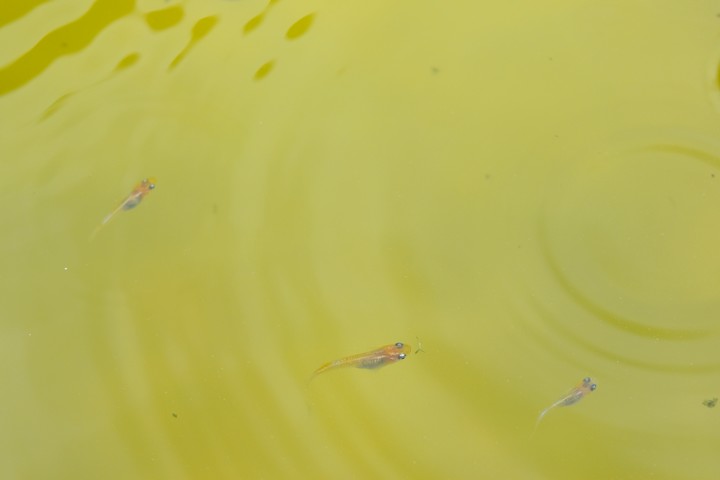
Newly hatched fry are terrible hunters. They can only eat food that is tiny, and they starve quickly if it isn't constantly in front of them. Green water solves both problems at once: the phytoplankton is small enough for the smallest mouths, and because it is suspended throughout the water, the fry are never more than a bite away from their next meal. That is why, in Japan, a container of green water is the traditional nursery for medaka and goldfish. It also feeds adult fish as a supplement. And as you will see at the end, it feeds the next step up the live-food ladder.
The Two Ways to Make Green Water

Green water is just phytoplankton multiplying in water, so making it means growing that phytoplankton on purpose. There are two routes, and both work — pick whichever fits your patience and your schedule.
Method 1 — Add Concentrated Chlorella (the fast route)
Chlorella is a species of green algae, and it is sold as a live liquid concentrate you can buy online. Because it is a living product, use a fresh bottle. The method itself is almost embarrassingly simple:
- Add the concentrate to oxygen-rich water at roughly 1 ml per 10 liters (about 2.5 gallons).
- Stir it in, then set the container in direct sunlight.
Two details decide whether it takes off. First, nutrients: phytoplankton multiplies fastest with a supply of nitrate, so start with water that has already housed fish rather than fresh tap water. Second, light: sunlight drives the photosynthesis that grows the culture. A sunny spot is not optional; it is the engine.
Skip the Substrate and Plants
Grow your green water in a bare container — no gravel, no live plants. It feels counterintuitive, but rooted plants compete directly with phytoplankton for nutrients and light, and the bacteria colonies living in a mature substrate draw down the oxygen your culture needs. Strip those competitors out and the algae gets the full share, which means a faster, denser culture.
Managing Summer Heat
Chlorella itself is tough; it survives even at 99–104°F (37–40°C). The trouble is what heat does to the water: high temperatures drive oxygen out and can trigger unwanted algae. As a safe ceiling, keep the culture below about 86°F (30°C). In hot weather, that usually means a bit of shade and topping up the water level as it evaporates. A reed screen or shade cloth over the container and a simple auto top-off both help hold the temperature down.
Method 2 — Let It Grow Naturally (the slow route)
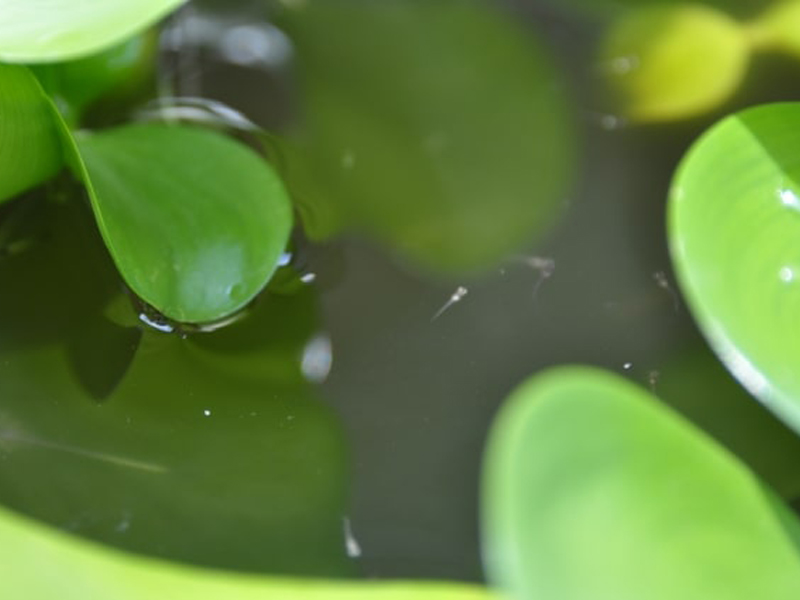
You don't strictly need a chlorella bottle. Given the right conditions, phytoplankton appears on its own, and if you grow it out, the water turns green by itself. The catch is time: this route can take 2–3 months, so save it for when you're not in a hurry.
The technique is just: aerate the water and leave it in the sun. Used tank water with a bit of nitrate in it is ideal fuel. If you're starting from cleaner water, you can add nutrients by dropping in some bruised or damaged plant matter, or a little liquid plant fertilizer.
The payoff for the wait is self-sufficiency: once you have a healthy natural culture going, you can use it as a starter to seed the next batch, over and over. The downside is that it is harder to control (the water can foul partway through), so if reliability matters, the chlorella concentrate is the safer bet.
Keep It at the Right Concentration
A finished culture doesn't sit still. Left alone, the phytoplankton keeps multiplying until the water goes dark and over-dense — and thick green water carries real risks:
- Oxygen crashes. Phytoplankton breathes at night, consuming oxygen instead of producing it. The denser the culture, the harder that hits, and a stretch of cloudy, low-light days makes it worse.
- Fouling and odor. In warm weather, over-rich water spoils faster: ammonia and bacteria build up and the container can start to smell.
- Zero visibility. You lose the ability to see your fish, and you won't spot predators like dragonfly larvae if they move into an outdoor container.
The rule of thumb Japanese breeders use for the right density is simple: you should be able to just faintly make out the bottom of the container. To hold it there, do regular partial water changes to thin it, and run gentle aeration to keep oxygen up.
For Fry, Thinner Is Safer
Fry have immature immune systems, so it's worth dialing the concentration down even further for them and keeping the culture on the thin side. "But won't thin water mean less food?" It's a fair worry, and the answer is that avoiding the risks of thick water matters more. Cover the feeding gap by pairing green water with other foods: powdered fry food, or live foods like daphnia and paramecium. In fact, fry raised on green water plus these foods tend to grow up hardier than those on green water alone. For serious rearing and breeding, that is the standard approach: keep the green water thin and feed live or prepared food alongside it.
The Next Step: From Green Water to Daphnia
Here is where a green-water habit pays a bonus. The phytoplankton that makes green water is also excellent food for daphnia (mijinko), the small crustaceans that, in turn, feed larger fry and adult fish. So once your fry have grown a little, you can put your green water to work as a daphnia culture.
Daphnia multiply fast on nutrient-rich green water, but there is a trap: they graze the phytoplankton down almost as quickly, and once the food runs out their numbers collapse. The fix is to keep a separate green-water-only container running on the side. Whenever the daphnia tank starts to clear, top it back up with green water from your reserve, and the culture stays stable.
FAQ
- Q. How long does it take to make green water?
- A. It depends on the method. With concentrated chlorella in warm, sunny water it can be ready in a matter of days. Growing it naturally — just aeration and sunlight — can take 2–3 months.
- Q. My green water is slimy and smells bad. Is that normal?
- A. No — that is cyanobacteria (blue-green algae), not true green water. It can be toxic and cause oxygen problems. Discard it rather than trying to use it. Healthy green water is evenly tinted and doesn't smell.
- Q. Isn't thin green water too little food for fry?
- A. On its own it would be marginal, which is why you shouldn't rely on it alone. Keep the water thin to avoid the risks of an over-dense culture, and feed powdered fry food or live food (daphnia, paramecium) alongside it. Fry raised this way grow up hardier.
- Q. Can I keep green water going long-term?
- A. Yes — that's the goal. Once you have a healthy culture, keep a dedicated green-water-only container as a reserve. Use it to seed new batches and to refill daphnia cultures as the water clears.