Why Do My Medaka Keep Dying? Causes and Fixes from Tokyo
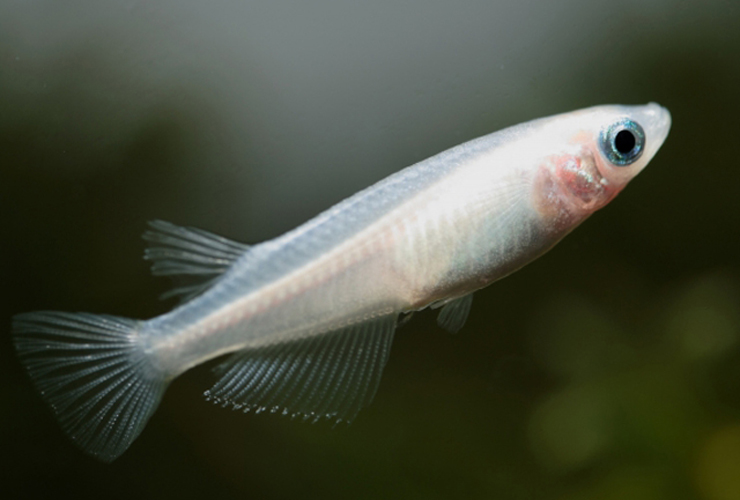
In Japan we describe the medaka (メダカ), the Japanese rice fish Oryzias latipes, with the word jōbu (丈夫): sturdy, hard to kill. And it's true, which is why deaths blindside keepers.
Two decades of maintaining tanks and container ponds have taught us this: medaka rarely die because they are fragile. They die from a short list of preventable causes: starvation, heat, oxygen deprivation, disease, and overfeeding, plus big, sudden changes to their environment. Identify the cause and you can usually stop the deaths that follow. This is the English edition of one of the most-read troubleshooting guides on our Japanese site. It covers the five killers, plus a related mystery: why a medaka sits motionless on the bottom.
- The five most common killers: starvation, heat, oxygen deprivation, disease, and overfeeding. Find the cause to protect the rest of the school.
- Feed what the fish finish in 1–2 minutes, twice a day in the warm season — one rule prevents both starvation and overfeeding.
- In a heat wave, shade the container and cool it gradually — never dump in ice or cold water.
- Fish gasping at the surface = oxygen emergency: partial water change or aeration immediately.
- A medaka sitting on the bottom signals cold, predators, or illness — below 59°F (15°C) it's usually normal winter dormancy; above that, investigate.
Quick Diagnosis: What You See vs. What It Means
Before changing anything, observe for two minutes — the symptoms point to the cause.
| What you see | Most likely cause | First move |
|---|---|---|
| Fish gulping at the surface | Oxygen deprivation | Partial water change or aeration, now |
| Deaths after a hot, windless day | Heat and/or low oxygen | Shade the container, restore surface movement |
| Bloated belly, sluggish feeding | Overfeeding, indigestion | Cut back; fast the fish for about 3 days |
| White spots, frayed fins, cotton-like growths | Disease | Isolate; salt bath or medication |
| On the bottom in cold weather, not eating | Winter dormancy — normal | Nothing. Don't feed, don't disturb |
| Thin fish in a crowded outdoor container | Starvation | Feed measured amounts on a schedule |
The Five Causes of Medaka Death
Cause 1: Starvation
Starvation happens more often outdoors than in. Container ponds usually run without a filter (bacteria, plants, and top-offs maintain the water), so keepers correctly feed lightly to avoid fouling it. Push that too far, though, and the smaller, weaker fish never get their share.
Outdoor containers do grow plankton that medaka happily eat, but the supply is unstable, and with more than a few fish it runs out. Treat plankton and green water as a supplement, not the menu.
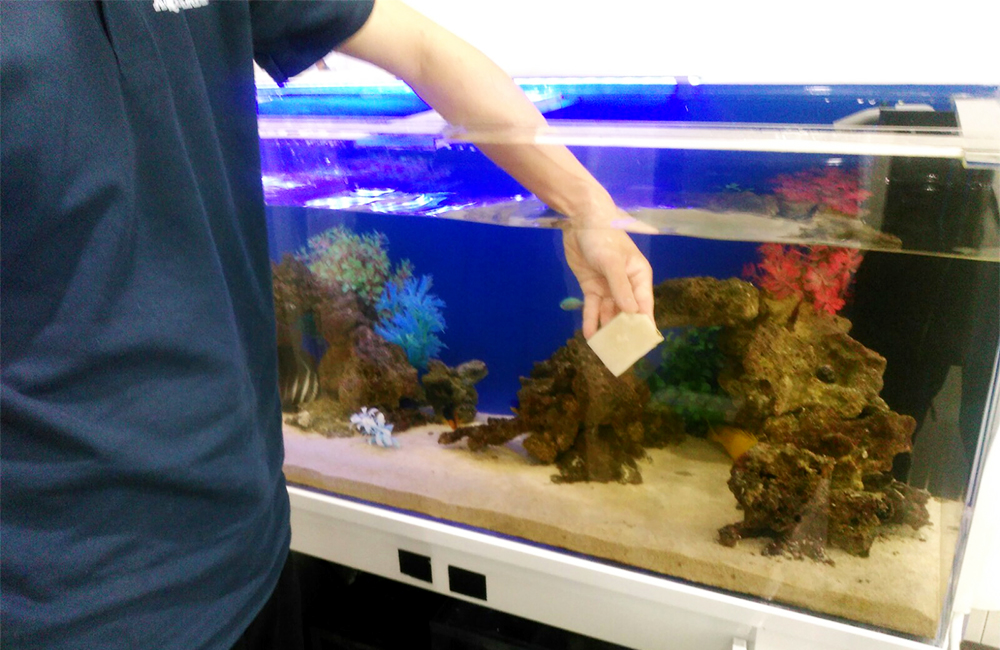
The fix: feed on a schedule. In the active season (spring through fall), feed twice a day, as much as the fish finish in 1–2 minutes, three minutes at most, and don't exceed package amounts. A fixed routine has a hidden benefit: when fish suddenly eat less, you notice. Appetite loss is often the first sign of illness or falling temperature.
Cause 2: Heat
Medaka handle warm water better than most fish; they won't drop dead the moment a pond passes 95°F (35°C). But sustained heat wears them down, and anything approaching 104°F (40°C) is dangerous even briefly. Outdoor containers in direct sun are the obvious risk, but an indoor tank near a sunny window can overheat too.
Outdoors, the answer is partial shade. Move the container out of the worst sun, but not into full shade, because medaka don't stay healthy without sunlight. Aim for roughly 8 hours of sun a day, with a thermometer in the water itself. Japan's classic tool is the sudare (すだれ), a woven reed screen laid over part of the container: it filters sun, lets air through, and doubles as rain and snow protection. In the US, garden shade cloth or a bamboo blind does the same job.
Floating plants also cast usable shade, with one US caution: the Japanese favorite, water hyacinth, is a regulated invasive in a number of states, so check your state's rules first. Thick-walled or styrofoam containers insulate against heat radiating up from the ground. In genuinely hot-summer regions (the Gulf South, Texas, the desert Southwest, inland California), treat shade as standard equipment.
Indoors, move the tank to a cooler room or entryway; if that isn't enough, a clip-on aquarium cooling fan brings the water down a few degrees through evaporation.
One rule for both settings: never crash the temperature with cold water or ice. The sudden swing in temperature and chemistry is exactly the shock that kills "hardy" fish. Cool gradually, always.
Cause 3: Oxygen Deprivation
Suffocation is the third major killer, and the warning sign is unmistakable: fish hanging at the surface, gulping. Act immediately; this one kills fast.
An outdoor container gets oxygen from just two sources: air dissolving in as the surface ripples, and plants photosynthesizing. The most dangerous weather is therefore a hot, windless day. No wind means no surface movement, and warm water holds less dissolved oxygen.
Heat hurts the plants too. When plants die back, aerobic bacteria consume oxygen breaking them down; if the decline continues, anaerobic bacteria take over and announce themselves with a foul smell. A bad-smelling container is already dangerous. Indoor tanks aren't exempt: heavily planted tanks consume real oxygen at night, when photosynthesis stops, and an overheated room lowers dissolved oxygen just like summer sun.
The fix: remove dying or overgrown plants early. In an emergency, a partial water change is first aid: fresh water carries fresh oxygen. Outdoors, water changes, top-offs, and a wide-mouthed container (far better gas exchange than a narrow one) usually solve it. Indoors, an air pump and air stone end the problem outright.
Cause 4: Disease
Hardy or not, medaka get sick, and from the same diseases that hit goldfish and tropical fish: fin rot, dropsy (pinecone-like raised scales), ich (white spot), and cotton-like fungal infections.
Most outbreaks arrive with new fish or new plants carrying pathogens or parasites. The rest start from within: stress weakens the immune system until bacteria always present in the water take hold. Because medaka are small, early symptoms are easy to miss — by the time you notice, a contagious disease may already be moving through the whole container.
Prevention beats treatment. At the store, look at the whole tank, not just your fish: if any fish in it shows ich, don't buy from that tank; white spot spreads invisibly. Buying online, stick to sellers with a track record, and inspect new arrivals before they go in.
Detection is behavioral. Hover a hand over the container or offer a pinch of food: healthy fish react crisply, sick fish respond slowly or not at all. Catch it early, isolate to stop the spread, then treat with a 0.5% salt bath (19 grams per gallon / 5 g per liter, in a separate container) or a medicated bath. The full salt-bath method is covered in our fin rot guide.
Cause 5: Overfeeding
The mirror image of starvation, and the more common failure with prepared foods. Medaka are built to eat small amounts, often; one oversized meal can cause indigestion. If a belly looks swollen, cut back; if badly bloated, fast the fish for about 3 days and watch.
Digestion also gets shaky in cold water and during early fall's hard day–night swings. Reduce portions then, or switch to an easily digestible food. Overfeeding kills indirectly, too: uneaten food sinks, rots, and degrades the water. The 1–2 minute rule from Cause 1 protects you on both ends.
Why Is My Medaka Sitting on the Bottom?
Medaka are top-water fish; they naturally cruise the upper layers. A medaka parked on the bottom has one of three reasons: cold, predators, or illness/injury. Check them in that order, calmly. Caught early, a bottom-sitting medaka very often swims off healthy again.
Reason 1: It's Cold — Probably Normal
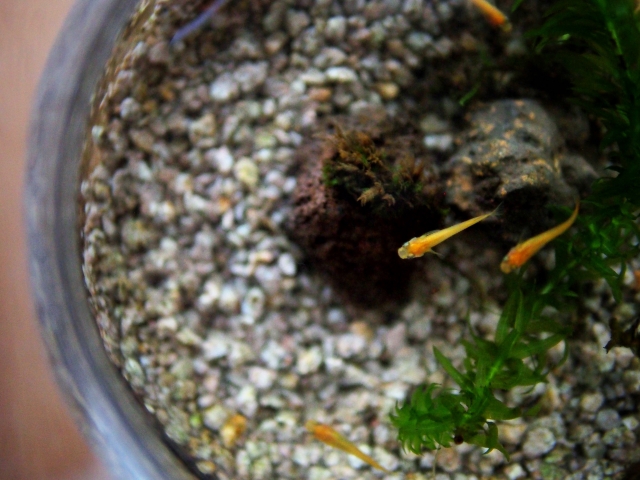
Medaka handle cold remarkably well: as long as the water doesn't freeze solid, they overwinter outdoors, tolerating water around 41°F (5°C). Activity drops below about 59°F (15°C), and around 50°F (10°C) most enter a dormant, hibernation-like state: motionless on the bottom, not eating. This is normal and safe.
So the first tool is a thermometer. Above 59°F (15°C), suspect a different cause. If it is genuinely cold, your only job is to keep the container from freezing solid: top off evaporation, keep the water level high (more volume holds temperature better), and lay a screen over the top against cold wind and snow. In colder US zones, where shallow containers can freeze through, a styrofoam container adds insurance.
One counterintuitive rule: leave dormant medaka alone. They don't eat in dormancy, so water changes aren't needed, and disturbing the water in winter causes the very swings that get fish sick. Hands off until spring wakes them.
Reason 2: A Predator Has Found Them
Diving to the bottom is a defense instinct: healthy behavior with an unhealthy trigger. Outdoor containers attract birds (herons are the classic US pond raider) and neighborhood cats; beyond the losses, the survivors live under chronic stress.
The test: with no predator pressure, a startled medaka dives, then comes right back up. Fish pinned to the bottom for long stretches, or panicking when you hover a hand over the water, are being hunted.
The fix is a physical barrier: pond or garden netting over the container. Predators visit because the meal is easy; once it isn't, they almost always move on. The sneakiest enemy is the dragonfly larva, yago (ヤゴ) in Japanese, which grows unseen inside the container and picks off fish from below. Netting also stops dragonflies from laying eggs in the water in the first place.
Reason 3: Illness or Injury
Only after ruling out cold and predators should you treat for disease — if the real cause is external, no medication will stop it from recurring. Check the body and fins for symptoms, then isolate and treat as needed.
For injuries, isolate and keep the water clean; wounds invite secondary bacterial infection. A 0.5% salt bath is the gentle option: it reduces the energy spent on osmotic regulation, conserving strength for recovery, which is why it helps injured fish as well as sick ones.
FAQ
- Q. What actually kills most medaka?
- A. Five things cover the vast majority of cases: starvation, heat, oxygen deprivation, disease, and overfeeding. And remember that weakening fish hide — a medaka that stays on the bottom, hides excessively, or spooks easily is telling you something is wrong.
- Q. Can a medaka die just from "being in poor condition"?
- A. Effectively yes. Poor condition weakens the immune system, raising the odds of disease, and accumulated damage can be fatal. Watch three things daily: is each fish eating, staying with the group, and not hiding more than usual?
- Q. How do I treat a sick medaka?
- A. Three tiers, matched to severity: very early symptoms often resolve with frequent partial water changes alone; a lethargic, bottom-sitting fish gets isolated and a salt bath; serious disease calls for a medicated bath. Observe calmly first — treatment should match the diagnosis, not your panic.
- Q. What's the best all-around protection for outdoor medaka?
- A. Stability. A shade screen moderates sun and heavy rain, a styrofoam container insulates against heat and freezing, top-offs maintain volume (more water = more stable water), and netting handles birds and dragonfly larvae.