Medaka Eggs: How to Hatch Japanese Rice Fish Eggs and Raise the Fry
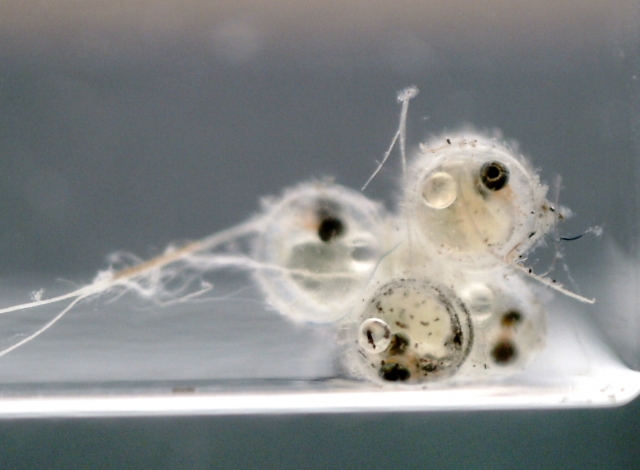
Once the water warms past 68°F (20°C), medaka — the Japanese rice fish (Oryzias latipes) — begin laying eggs almost daily. In Japan, hatching those eggs is a beloved summer ritual: children raise them on apartment balconies, and breeders have created over 450 named varieties. This is the most-read article our team has ever published in Japanese, and this is its English edition.
The eggs hatch in roughly 10–14 days, and the two things that decide your success rate are simple: keeping fungus off the eggs, and having tiny food ready before the fry starve. Here is exactly how we do it in Tokyo.
- Medaka eggs hatch by the degree-day rule: about 250°C·days — roughly 10 days at 77°F (25°C), 13 days at 68°F (20°C).
- The #1 enemy is fungus. Remove white (infertile) eggs daily and change the water every day.
- Separate eggs from the parents — adult medaka eat their own eggs and fry.
- Newly hatched fry survive only 2–3 days on their yolk sac. Have powder food, infusoria, or green water ready by day 3.
- Return juveniles to the parent tank only when they reach about 0.8 inches (2 cm) — smaller fry are food.
The 30-Day Timeline: From Egg to Stable Fry
| Days | What happens | What you do |
|---|---|---|
| 1–3 | Eggs laid (females carry them, then attach them to plants) | Collect eggs into a separate container. Plain tap water is fine at this stage — see below |
| 4–7 | Infertile eggs turn cloudy white | Remove white eggs daily with a pipette; change water daily |
| 8–12 | Dark eyes become visible inside the eggs | Hatching is near — switch to dechlorinated water now |
| 13–14 | Hatching (usually in the morning, rarely all at once) | Do not feed yet; fry live off the yolk sac |
| 15+ | Yolk sac depleted — starvation risk spikes | Feed powder fry food, infusoria, or green water several times daily |
Setting Up a Hatching Container

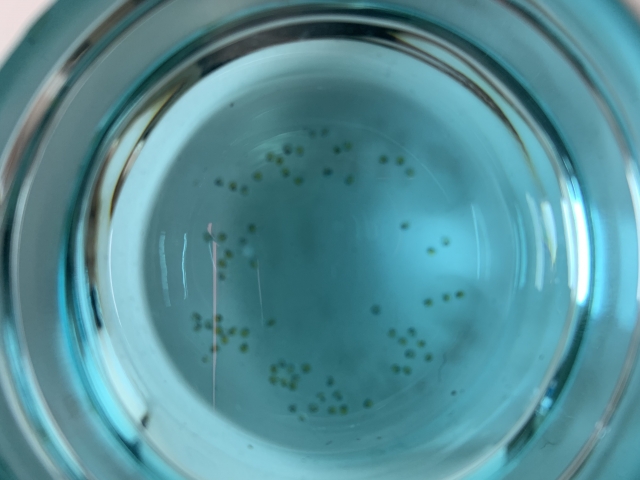
You don't need equipment — you need clean water. A food-storage container or large deli cup works: about 2 cups (500 ml) of water per clutch of eggs, with a wide opening so oxygen can dissolve. No filter, no airstone needed at this size. For bigger batches (half a gallon and up), a gentle air stone raises hatch rates by keeping water moving.
The smaller the container, the faster the water fouls — which is why the daily water change is non-negotiable.
The Japanese Tap Water Trick — With One US Warning
Here is a technique every medaka breeder in Japan uses: for the first week, keep the eggs in plain, untreated tap water, changed daily. The chlorine that would harm fish actually protects the eggs by suppressing fungus and bacteria — and the eggshell shields the embryo.
Methylene Blue: The Reliable Fungus Blocker

The standard tool for egg fungus — in Japan and the US alike — is methylene blue (Kordon and API sell it in the US). Use a weak dilution: it conveniently stains infertile eggs blue, making them easy to spot and remove, while healthy eggs stay clear. It breaks down in light, so re-dose after water changes. As with the tap water method, move eggs to clean dechlorinated water just before hatch.
Light and Temperature
Medaka eggs develop best with 13–14 hours of light per day — a windowsill works, or any aquarium/plant LED on a timer. Ideal water temperature is around 77°F (25°C).
The hatching clock runs on the degree-day rule (積算温度, sekisan-ondo) — a formula Japanese breeders use daily: eggs hatch when accumulated temperature reaches about 250°C·days. In practice:
| Water temperature | Days to hatch |
|---|---|
| 77°F (25°C) | ~10 days |
| 72°F (22°C) | ~11–12 days |
| 68°F (20°C) | ~13 days |
Small containers in direct sun overheat fast — keep a thermometer in the container, not just in the room.
Why Eggs Get Fungus (and How to Stop It)
White Eggs Are Infertile — Remove Them Daily
A few days after laying, infertile eggs turn cloudy white. They will never hatch, and they are the launching pad for fungus that spreads to healthy eggs. Pull them out as soon as you see them. Fertile eggs are surprisingly firm — gentle handling with a pipette or even fingertips won't hurt them.
Break Up Egg Clumps
Medaka eggs come attached to sticky threads (fuchakushi (付着糸) — "attachment threads") that bind them into clumps. Clumped eggs trap stagnant water between them and mold faster. Gently separate clumps into single eggs; some breeders roll eggs on gauze to strip the threads entirely. If you're new to this, don't force it — even un-separated eggs mostly hatch if you change the water daily.
After Hatching: The Critical First Week
Protect the Fry from Equipment — and Their Parents
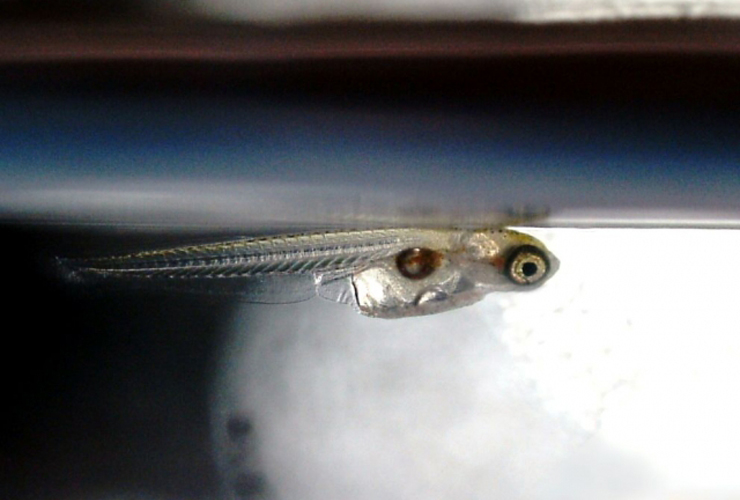
Move fry (scooped with their surrounding water) to a roomy grow-out container. No filter at first: newly hatched medaka can't fight any current, and standard filters will eat them. A gentle sponge filter becomes safe once they've grown a bit. And never put fry back with adults yet — medaka parents eat their young without hesitation.
Feeding: Starvation Is the #1 Fry Killer

Fry can't fit adult food in their mouths. From day 3, feed several times daily with any of:
| Food | Notes |
|---|---|
| Powdered fry food | Easiest. Hikari First Bites is the US-available standard (Hikari is a Japanese brand we use at work) |
| Infusoria / paramecium culture | What Japanese breeders culture at home from rice-rinse water or yeast — live food gives the fastest growth |
| Green water | Water tinted green with phytoplankton — a self-serve buffet. It grows on its own in a sunny container with a little fish waste |
The goal is a container where food is always available — a fry that has to wait for dinner is a fry that starves.
When Can Fry Rejoin the Parents?
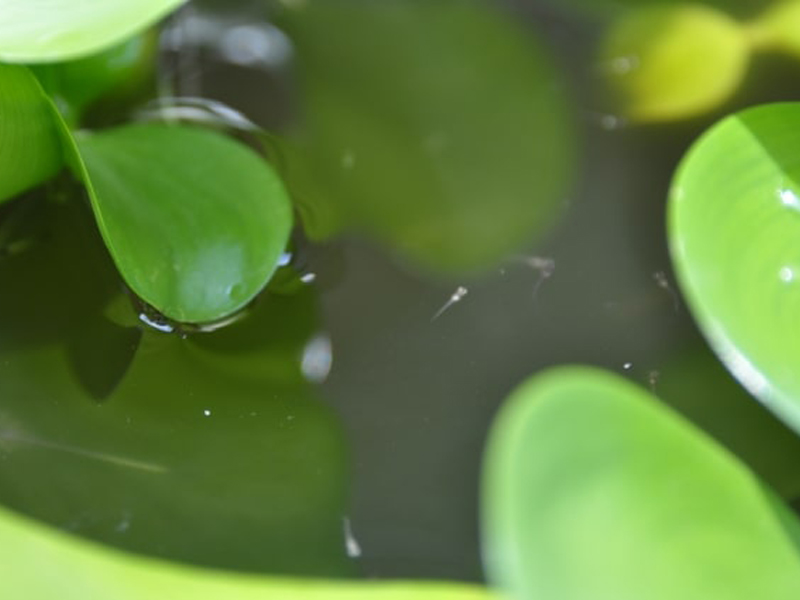
When they no longer fit in an adult's mouth: about 0.8 inches (2 cm), or two-thirds of the parents' size. Any earlier and they're on the menu.
FAQ
- Q. My eggs turned completely white. Will they hatch?
- A. No — white eggs are infertile or have stopped developing. Remove them quickly so fungus doesn't spread to the healthy eggs.
- Q. How many eggs does a medaka lay?
- A. 10–30 per spawning, and they spawn almost daily in season (early summer to fall). One female can produce several hundred eggs in a season.
- Q. The parents keep eating the eggs. How do I stop them?
- A. You can't train them — separate the eggs instead. Collect eggs in the morning (spawning peaks at dawn), or use a spawning mop you can lift out whole.
- Q. None of my eggs are ever fertile. What's wrong?
- A. Usually: no functioning male (check fin shapes — males have larger dorsal/anal fins), water below 50°F (10°C), or old/undernourished parents.
- Q. My fry keep dying one after another.
- A. Almost always starvation or fouled water. Start feeding by day 3 with powder food or green water, and double the container's water volume if deaths continue.