20 Best Freshwater Fish for Beginners: Cheap and Hardy
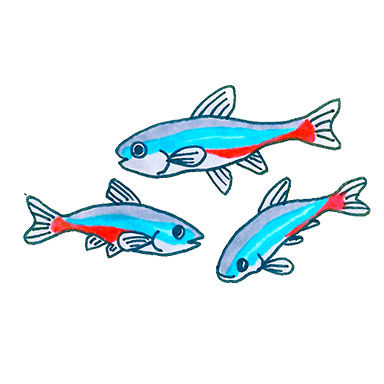
In Japan the general term is nettaigyo (熱帯魚), literally "tropical fish," and it covers everything from a two-centimeter rasbora to a fish longer than your forearm. This guide is not about the whole hobby. It is about the first tank, and the fish that forgive the mistakes every beginner makes.
Our Tokyo team has kept client aquariums running since 2005, and these are the fish we reach for when a setup has to survive an owner who is still learning. We ranked all twenty against three plain tests: does it eat readily, does it shrug off a water slip, and can you buy it without hunting. Sizes and temperatures are in US units. Prices are described rather than quoted, because they move too much across shops and seasons to pin to a dollar figure.
- The ranking rewards hardiness and availability, not looks. The tougher a fish is with imperfect water, the higher it sits.
- Start with one or two species, not ten. A crowd of different fish is harder to feed and read than a single shoaling group you get to know.
- Shoaling fish need numbers. Neon tetras, rasboras and lampeyes look and behave right in groups of five to ten or more, not as singles.
- Most of these are US aquarium staples. Guppies, neon tetras, corydoras, bettas and cherry shrimp are stocked almost everywhere; a few of the rasboras are specialty-store fish.
- Never release aquarium fish. Guppies, platies and mollies have gone feral on several continents. A fish you cannot keep goes back to a shop or to another hobbyist.
What Counts as a Beginner Fish
A fish earns a spot here by being easy on three fronts at once: it eats standard flake or pellet food without coaxing, it tolerates the water-quality swings of a tank that is not yet mature, and it is common enough that any shop can order it. A striking fish that fails one of these tests, a wild-caught specialist or a fin-nipper, is a second-tank fish.
One habit worth learning early is to match body type and swimming speed among tankmates. A slim, fast fish clears the food before a slow, round-bodied one reaches it, and half the "my fish is starving" problems we see on maintenance rounds are really a speed mismatch at feeding time.
The Top Tier: Bulletproof First Fish
These four are the ones we hand a nervous beginner. They eat anything, take a water slip in stride, and cost very little.
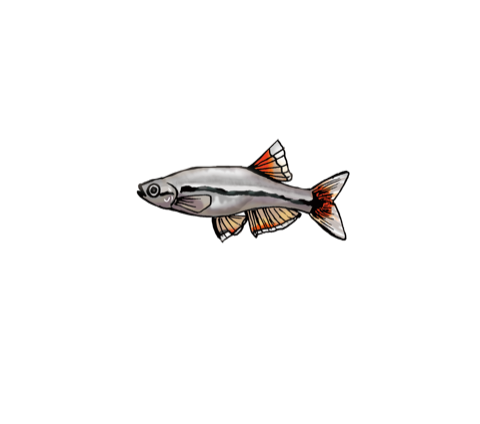 No. 1White Cloud Mountain Minnow — akahire (アカヒレ), Tanichthys albonubes, from China, and the single hardiest fish on this list. It shrugs off cool water, missed feedings and poor water quality, which is why it is the classic pilot fish for breaking in a new tank. It grows to about 1.5 in (4 cm), lives two to three years, and is often sold in jars as a "Coppy." Peaceful with neon tetras and other small community fish, though it eats fast, so watch that slower tankmates get their share. Inexpensive and stocked almost everywhere. To 1.5 in (4 cm) · 50–81°F (10–27°C) · very peaceful · community-safe.
No. 2Lambchop Rasbora (Rasbora espei) — Trigonostigma espei, from Thailand and Cambodia: an orange body, a dark cleaver-shaped mark, and a calm disposition that makes it a shop-recommended starter fish in Japan. To about 1.5 in (4 cm), two to three years. It comes from soft, slightly acidic water, and kept a touch acidic it deepens to a pinkish orange, the males reddening in the fins to breed. Keep five or six or more for the shoaling behavior, and it mixes freely with neon tetras, platies and corydoras. To 1.5 in (4 cm) · 72–82°F (22–28°C) · peaceful · community-safe.
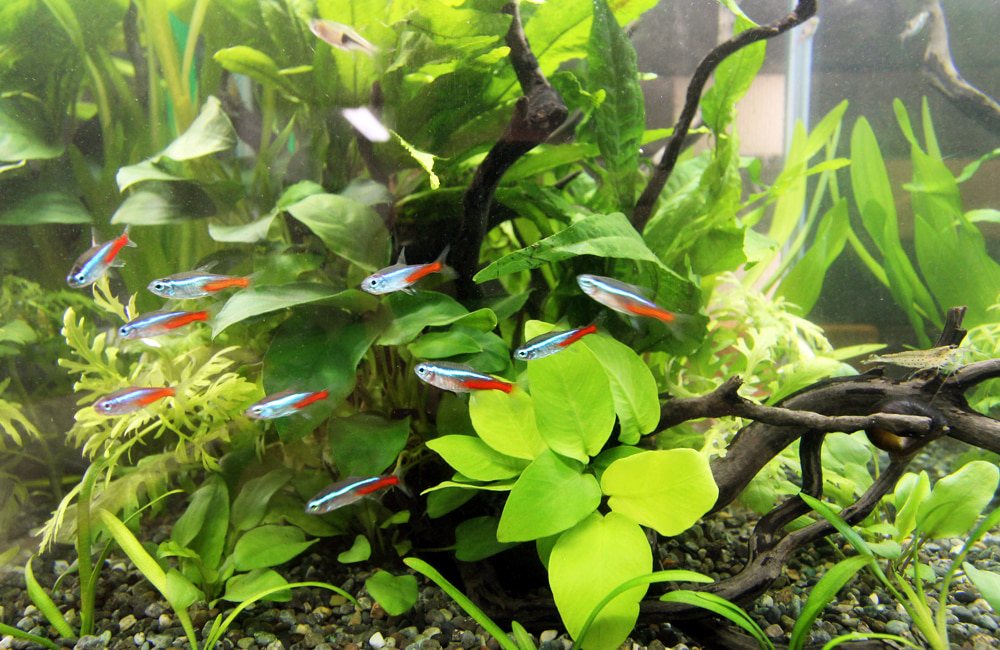
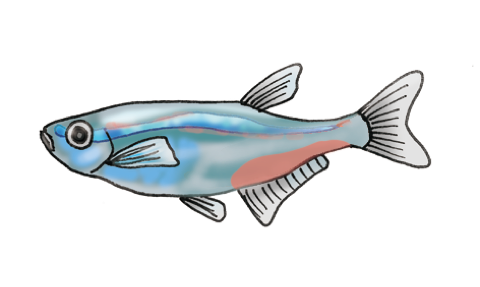 No. 3Neon Tetra — Paracheirodon innesi, from the Amazon basin. The fish most people picture when they hear "tropical fish," and a fair emblem for the beginner hobby: cheap, tolerant of water changes, peaceful, and stocked in every shop because it is bred commercially in huge numbers. To about 1.2 in (3 cm), one to two years. Shoal five or more. It is a surprising glutton for its size and can get pushy at feeding time, so do not overfeed. Its near-twin the cardinal tetra grows a shade larger; pick by tank size. To 1.2 in (3 cm) · 68–82°F (20–28°C) · peaceful · community-safe.
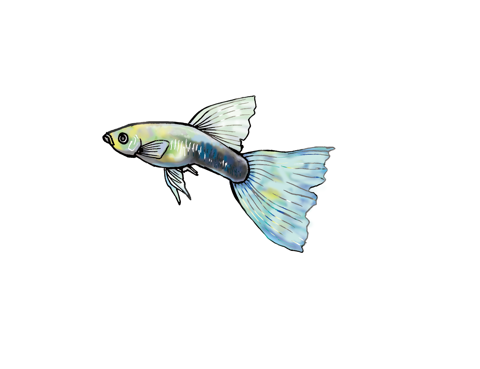 No. 4Guppy — Poecilia reticulata, a livebearer, so young arrive as free-swimming fry rather than eggs. Peaceful, forgiving, and famous for breeding on its own: a few fish become fifty before you notice, so house males and females apart if you do not want a population. Males reach about 1.5 in (4 cm), females about 2.5 in (6 cm), one to two years. Fancy strains are bred worldwide, and the long tails can slow the fish down, so keep it from fin-nippers and boisterous eaters. Never release one outdoors, as guppies have naturalized far beyond their native South America. Males to 1.5 in (4 cm), females to 2.5 in (6 cm) · 68–82°F (20–28°C) · very peaceful · community-safe.
Livebearers and Workers
The next group adds two easy livebearers and the tank's cleanup crew: bottom-feeders and an algae-grazer that earn their keep.
No. 5Platy — Xiphophorus maculatus, from Mexico, and a livebearer like the guppy. Just as hardy, just as quick to breed, and tolerant of lean feeding and cool rooms; in a heated room it can sometimes manage without a heater. To about 2.5 in (6 cm), one to two years. Friendly enough to gather at the glass and beg at feeding time. Bred in every color, including the popular Mickey Mouse platy with a mouse-face mark at the tail base. As with mollies and guppies, never release it. To 2.5 in (6 cm) · 68–82°F (20–28°C) · very peaceful · community-safe.
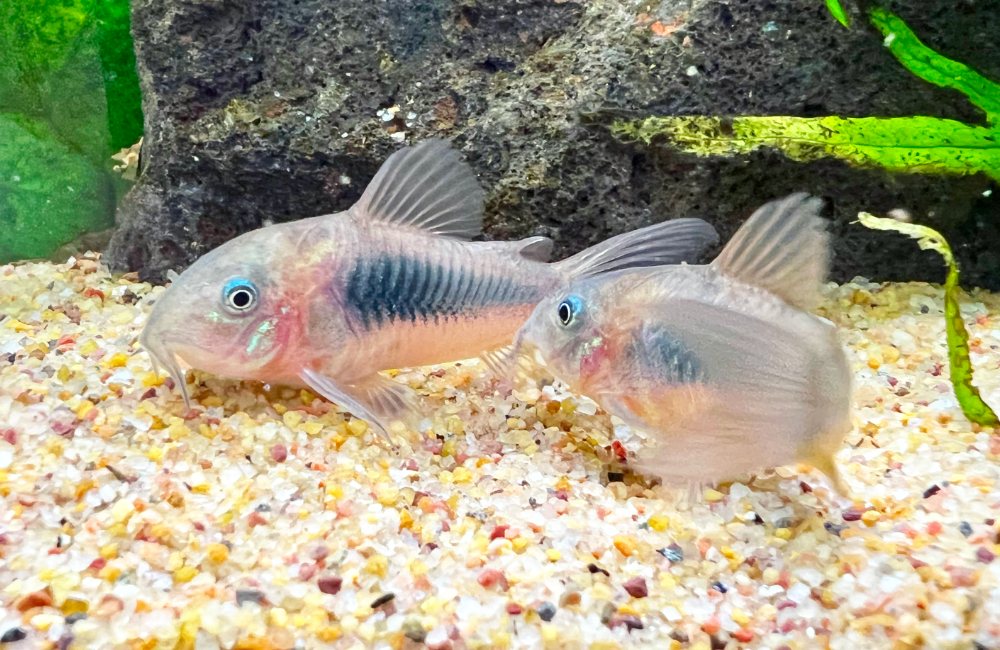
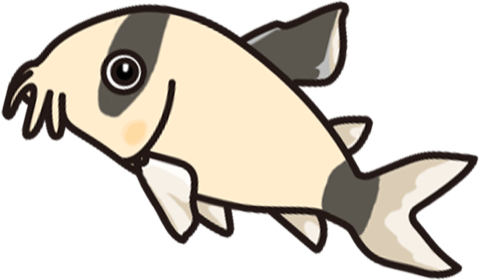 No. 6Corydoras — small armored catfish from South America, with over a hundred species in the trade and a devoted following that keeps species tanks just for them. To roughly 2.5–4 in (6–10 cm), three to five years. They work the bottom, hoovering up food that settles into the substrate, but leftovers alone are not enough, so feed a sinking catfish food. Peaceful and happy in a group, and kept several together they breed fairly readily. Some species carry a mild venom in the fin spines, so net them rather than handle them. Ideal alongside mid- and upper-water fish like neon tetras. To 2.5–4 in (6–10 cm) · 68–81°F (20–27°C) · very peaceful · bottom-dweller.
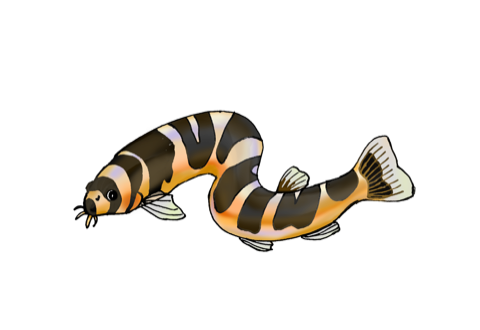 No. 7Kuhli Loach — Pangio kuhlii, an eel-shaped loach from Southeast Asia, banded yellow and brown, with a long lifespan of around ten years, unusual for a small fish. To about 4 in (10 cm). A secretive burrower that often stays hidden by day, so do not panic when you cannot find it. Give it fine sand or a powder-type substrate, never sharp gravel, which can scratch its body, snap its barbels, or injure its eyes. Like corydoras it forages the bottom, but feed sinking food to be sure it eats; shy individuals will feed after lights-out. To 4 in (10 cm) · 68–82°F (20–28°C) · very peaceful · fine substrate only.
No. 8Golden Honey Dwarf Gourami — a small, warm-colored gourami to about 2 in (5 cm), three to five years, bred from Southeast Asian stock. Bigger than a neon tetra but gentle, and a good pick for a beginner who wants more presence. It has a labyrinth organ and breathes air from the surface, so it handles low oxygen well. Its slow, deliberate swimming lets fast tankmates rob it at feeding time, and strong current wears it down, so keep the filter flow gentle. It builds a fragile floating bubble nest to spawn, so add tall or floating plants near the surface. To 2 in (5 cm) · 68–82°F (20–28°C) · peaceful · gentle flow.
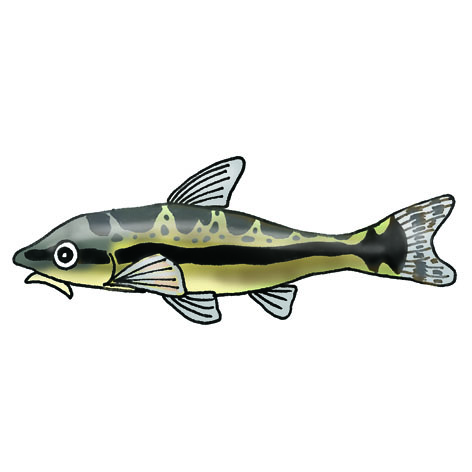 No. 9Otocinclus — Otocinclus spp., a tiny algae-grazing catfish from Brazil, to about 2 in (5 cm), around three years, and a staple of planted tanks: a few keep soft algae off glass, wood and leaves for a long time. They cannot handle tough spot algae or long hair algae, and in a too-clean tank they can starve, so offer a sinking wafer now and then, but not so often that they stop grazing. Peaceful with everyone. The one caution is acclimation, since they are prone to shock when first added, so drip-acclimate slowly. To 2 in (5 cm) · 68–82°F (20–28°C) · very peaceful · acclimate slowly.
The Personality Fish
One fish here breaks the community rule on purpose. The betta is a beginner fish in every way except that it usually lives alone.
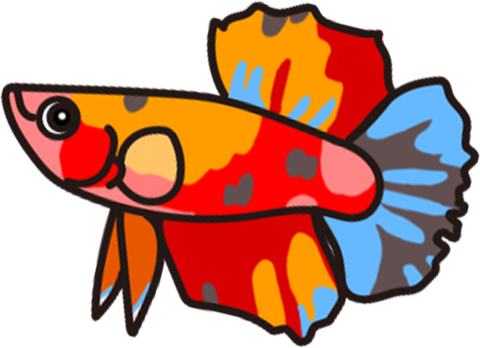 No. 10Betta — Betta splendens, from Thailand, where it is the celebrated "fighting fish." Males carry flowing, goldfish-like fins in vivid colors, bred into forms like crowntail, halfmoon and doubletail and judged at shows worldwide. To 2–2.75 in (5–7 cm), one to three years, cheap at the low end and pricey at show grade. Its labyrinth organ lets it take air from the surface, which is why it survives in small containers, but small water fouls fast, so a beginner does better with a tank of 10 in (25 cm) or larger. The catch is temperament: males fight other bettas relentlessly and often bother other fish, so keep one alone. To its owner it is personable and full of expression. To 2–2.75 in (5–7 cm) · 77–82°F (25–28°C) · aggressive to its own kind · keep solo.
Shoaling Tetras and a Molly
These four are peaceful group fish, most of them small tetras that come into their own in a shoal against a planted background.
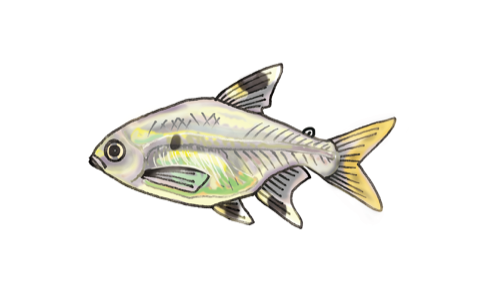 No. 11White Pristella Tetra — a pale color form of the pristella tetra, Pristella maxillaris, from the Amazon in Brazil. White body, yellow fins, a near-transparent belly, and a quiet elegance that suits a planted tank. To about 2 in (5 cm), up to five years with good care. It shoals especially well, so keep ten or more; in ones and twos it hides. It also jumps, so keep the tank covered. Very peaceful and safe with anything. To 2 in (5 cm) · 68–82°F (20–28°C) · very peaceful · keep 10+, lid on.
No. 12Red Tetra (Fire Tetra) — Hyphessobrycon amandae, from Brazil, a translucent orange fish that deepens to a rich, glowing red-orange as it settles in. Tiny, about 1 in (2.5 cm), and lovely shoaling against green plants. It likes fresh water, so slightly more frequent water changes bring out the color. The small mouth makes it a slow, fussy eater that takes food as it sinks, so avoid keeping it with fast, greedy tankmates that clear the surface first. Peaceful and tolerant of a wide pH range. To 1 in (2.5 cm) · 68–81°F (20–27°C) · very peaceful · slow eater.
 No. 13Rummy-nose Tetra — a red-faced, striped-tail tetra that shoals tightly even in small numbers. To about 2 in (5 cm), and a strong swimmer, so keep the tank covered. The red face is a live gauge of the fish's state: it pales at "waking" just after the lights come on and deepens once the fish is fully alert, which is a handy cue to hold feeding until the color is back up. Peaceful but a keen, quick eater, so check that slower fish are still getting fed. To 2 in (5 cm) · 68–82°F (20–28°C) · very peaceful · lid on.
No. 14Silver Molly — a livebearer like the guppy and platy, bred from North American molly stock, very prolific, often dropping ten or more fry at a time. To about 2.5 in (6 cm), stocky and substantial when full-grown. Friendly and quick to beg at the glass, though a molly can bully smaller fish, so watch a new mix. It is bred in many forms, black, balloon, orange and dalmatian, mostly in Southeast Asia. To keep the clean silver color, house only one molly variety, since crosses throw muddy, mixed coloring. To 2.5 in (6 cm) · 73–81°F (23–27°C) · mostly peaceful · watch smaller tankmates.
A Cichlid, a Catfish, and the Nano Fish
The last stretch spans the biggest fish on the list, a transparent oddity, and a run of tiny nano fish for small planted tanks.
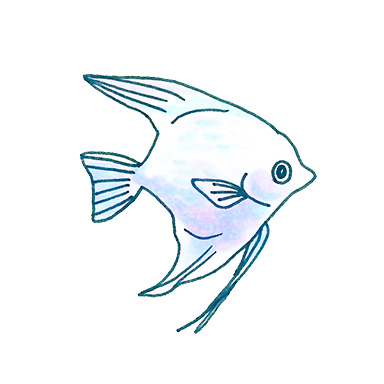 No. 15Angelfish — Pterophyllum scalare, a South American cichlid and, with the neon and the guppy, one of the faces of the hobby. Easy to keep but not a true community fish: it is territorial, chases smaller tankmates, and is predatory enough that it will eat shrimp and small fish, so pair it with similar-sized fish or its own kind. Depending on strain it runs from about 6 in (15 cm) to as much as 12 in (30 cm), and its finnage makes it tall, so a tank at least 18 in (45 cm) high suits it. Not a first fish, but a manageable step up. To 6–12 in (15–30 cm) · 72–84°F (22–29°C) · assertive · tall tank, size-matched tankmates.
No. 16Harlequin Rasbora (Rasbora heteromorpha) — Trigonostigma heteromorpha, from Indonesia, close cousin to the lambchop at No. 2 but deeper-bodied with a broader black wedge. To about 1.2 in (3 cm), three to five years. It prefers settled, mature water over freshly drawn water, but do not stretch out water changes to chase that; change small amounts often instead. Keep ten or more to see the shoal form up. Hardy and undemanding. A bit of trivia: long sold as a "Rasbora," it was reclassified into genus Trigonostigma in the 1990s, but the old trade name stuck. To 1.2 in (3 cm) · 72–82°F (22–28°C) · very peaceful · keep 10+.
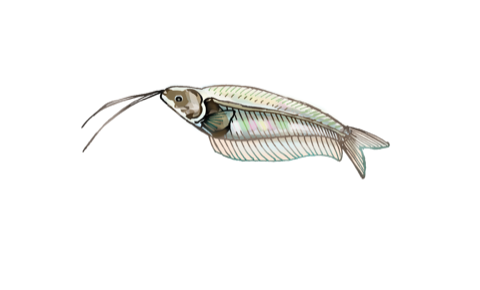 No. 17Glass Catfish — Kryptopterus vitreus, from Thailand and Borneo, a see-through catfish whose body is clear except for the bones and a compact knot of organs behind the head. It is handy for a beginner because a fish in poor health turns cloudy white, so trouble shows early. To about 4 in (10 cm). It shoals and needs company, sulking in cover in ones and twos but drifting mid-water and looking ethereal in a group. Despite the delicate look it is a real eater and will take small fish or shrimp that fit its mouth, so choose tankmates by size, and being nocturnal it feeds best after the lights go out. Do not release it, as it has gone feral in Taiwan. To 4 in (10 cm) · 75–82°F (24–28°C) · peaceful, but eats fish that fit its mouth · keep in a group.
No. 18African Lampeye — Poropanchax normani, a killifish relative from Cameroon and Nigeria whose eyes appear to glow blue, which is reflected light, not real luminescence. To about 1.2 in (3 cm), understated and refined, and a good way to color the often-empty upper water since it swims near the top. It dislikes sudden water-quality swings, but past that it is hardy and holds condition well once settled. Like other killifish relatives it breeds fairly readily, best in a species tank. It is very small, tinier still as a new import, so buy a good group and keep it from mid- to large fish like angelfish that would simply eat it. To 1.2 in (3 cm) · 73–81°F (23–27°C) · very peaceful · buy in numbers.
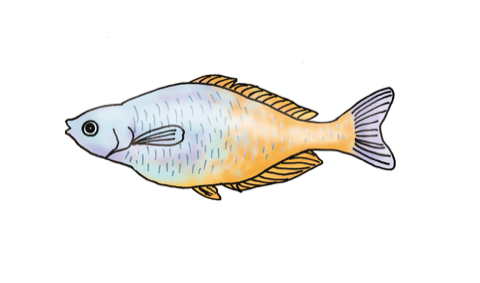
No. 19Blue-eye Rasbora — a small rasbora from Indonesia with a plain body but a glowing blue ring on the eye, like the African lampeye except the light sits on the lower rim rather than the upper. To about 1.2 in (3 cm), darker-bodied than the lampeye with a black-and-white dorsal fin. Hardy, unfussy about food and inexpensive, it is an easy way to try something a little unusual, and against dark green plants like Java fern or anubias the blue eye reads best. One caution: the glow varies by individual, and a fish that barely glows may be a different, larger look-alike species. To 1.2 in (3 cm) · 68–77°F (20–25°C) · very peaceful · community-safe.
No. 20Chili Rasbora (Boraras brigittae) — Boraras brigittae, from Borneo, one of the smallest fish here at about 0.6–0.8 in (1.5–2 cm) and, many say, the most beautiful of the genus, a deep vivid red marked by a black line. A carp relative like the White Cloud, tolerant of water swings and not hard to keep, its size suits nano tanks and even bottle setups as an accent. The mouth is tiny, so feed a fine, small-grain food. Peaceful, but big tankmates can swallow it, so choose companions by size. It breeds readily in a well-planted tank, though the eggs and fry are minute and easily eaten. To 0.6–0.8 in (1.5–2 cm) · 68–82°F (20–28°C) · very peaceful · nano tanks.
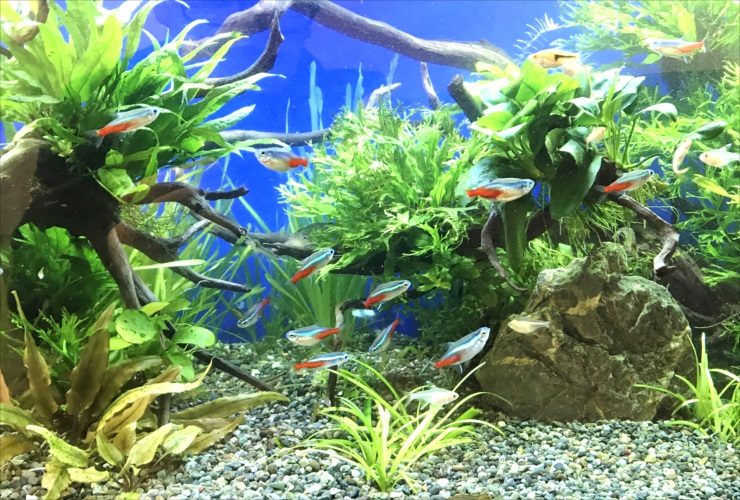
Two Easy Shrimp for the Cleanup Crew
Shrimp graze algae and mop up uneaten food, and they are worth adding once the tank is stable. Both of these are hardier than their reputation suggests, though shrimp in general are more sensitive to bad water and sudden temperature shifts than the fish above, so add them to an established tank. For the whole algae-eating team, and which animal eats which algae, see our aquarium cleanup crew guide; the Amano gets a full write-up in our Amano shrimp care guide.
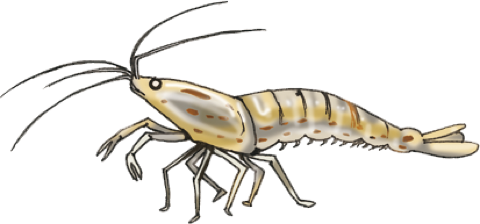 Amano Shrimp — Caridina multidentata, yamato-numaebi (ヤマトヌマエビ), native to Japan and the classic algae-cleaning shrimp. It will not overrun a tank, because its larvae need brackish water to develop and so it effectively cannot breed in a home freshwater tank, exactly what you want if you like shrimp but not population booms. It does not attack fish and is fairly tolerant of water swings for a shrimp. It reaches about 2 in (5 cm), large enough to be conspicuous, and molts as it grows, so an empty shed shell is normal, not a death; leave it, since the shrimp often eats it. A big, strong shrimp, it may nip new plant shoots if underfed, so offer a shrimp food. To 2 in (5 cm) · peaceful · will not breed in freshwater.
Cherry Shrimp / Minami Shrimp — Neocaridina davidi, minami-numaebi (ミナミヌマエビ), smaller than the Amano and, unlike it, able to breed in a plain freshwater tank, so a stable setup fills up on its own. The larvae are live food to fish, though, so give them cover, such as a clump of Java moss or a shrimp shelter. Its cleanup ability is weaker than the Amano's because of its size, but it is easy to keep and easy to breed. Treat it as a barometer, since shrimp show water trouble before fish do, and a dead one is a signal to check the tank. The familiar Red Cherry Shrimp is a color-selected form of this same species, kept the same way; the prized Crystal Red Shrimp is far more demanding and not a beginner animal. To 1.2 in (3 cm) · peaceful · breeds in freshwater, give the fry cover.
Quick-Reference Table: All 20 Beginner Fish
Sizes and temperatures in US units; pH is the range each fish tolerates. "Community" means safe with peaceful, size-matched tankmates.
| # | Fish | Adult size | Temp | pH | Community? |
|---|---|---|---|---|---|
| 1 | White Cloud Mountain Minnow | 1.5 in (4 cm) | 50–81°F | acidic–alkaline | Yes |
| 2 | Lambchop Rasbora (espei) | 1.5 in (4 cm) | 72–82°F | acidic–alkaline | Yes |
| 3 | Neon Tetra | 1.2 in (3 cm) | 68–82°F | acidic–neutral | Yes |
| 4 | Guppy | M 1.5 / F 2.5 in | 68–82°F | neutral–alkaline | Yes |
| 5 | Platy | 2.5 in (6 cm) | 68–82°F | neutral–alkaline | Yes |
| 6 | Corydoras | 2.5–4 in (6–10 cm) | 68–81°F | acidic–neutral | Yes |
| 7 | Kuhli Loach | 4 in (10 cm) | 68–82°F | acidic–neutral | Yes |
| 8 | Golden Honey Dwarf Gourami | 2 in (5 cm) | 68–82°F | acidic–neutral | Yes |
| 9 | Otocinclus | 2 in (5 cm) | 68–82°F | acidic–neutral | Yes |
| 10 | Betta | 2–2.75 in (5–7 cm) | 77–82°F | acidic–neutral | No (solo) |
| 11 | White Pristella Tetra | 2 in (5 cm) | 68–82°F | acidic–neutral | Yes |
| 12 | Red Tetra (Fire Tetra) | 1 in (2.5 cm) | 68–81°F | acidic–neutral | Yes |
| 13 | Rummy-nose Tetra | 2 in (5 cm) | 68–82°F | acidic–neutral | Yes |
| 14 | Silver Molly | 2.5 in (6 cm) | 73–81°F | neutral–alkaline | Mostly |
| 15 | Angelfish | 6–12 in (15–30 cm) | 72–84°F | acidic–neutral | Care needed |
| 16 | Harlequin Rasbora (het) | 1.2 in (3 cm) | 72–82°F | acidic–neutral | Yes |
| 17 | Glass Catfish | 4 in (10 cm) | 75–82°F | acidic–neutral | Mostly |
| 18 | African Lampeye | 1.2 in (3 cm) | 73–81°F | acidic–neutral | Yes |
| 19 | Blue-eye Rasbora | 1.2 in (3 cm) | 68–77°F | acidic–neutral | Yes |
| 20 | Chili Rasbora (brigittae) | 0.6–0.8 in (1.5–2 cm) | 68–82°F | acidic–neutral | Yes |
Figures reflect typical shop conditions and adapt the original Japanese article's data; individual fish and suppliers vary.
Where to Start
Every fish here is appealing, but pick one or two species to begin with. A tank of a single shoaling group is easier to feed, easier to read, and a faster teacher than a crowd of odds and ends. Take it slow, watch how the fish behave, and the knowledge accumulates on its own. A quality aquarium light helps too, both for the fish and for how they look; an adjustable multi-color LED lets you tune the tank to whatever you keep.
FAQ
- Q. Which fish are best for a complete beginner?
- A. The ones that shrug off water-quality swings: the White Cloud Mountain Minnow, neon tetra, platy, guppy and lambchop rasbora. They are small and tough, do not need a big tank, produce little waste, and will not crash the water chemistry overnight. A standard starter aquarium kit is enough for all of them.
- Q. Which fish are not beginner fish?
- A. Fish that grow large, act aggressive, or are fussy about water: discus, plecos and arowana, for a start. Tiger barbs stay small but nip fins and unsettle a community. These generally need a mid-size tank or bigger and a keeper who already has the basics down.
- Q. What makes a fish beginner-friendly in the first place?
- A. It can live in a small-to-medium tank, resists disease, eats readily, is easy to buy, and is not hypersensitive to water quality. A fish that needs a large tank makes both keeping and cleaning harder, so it is best left until later.
- Q. How many fish should I start with?
- A. Fewer than you think. One or two species is plenty at first, and shoaling fish like neon tetras or rasboras want five to ten of their own kind rather than a mixed handful. A lightly stocked tank is far more forgiving of a beginner's mistakes than a full one.
- Q. What is the single most important thing to keep up with?
- A. Maintenance rhythm: regular water changes and gravel cleaning. Staying on top of them keeps small problems from turning into fast ones. The right pace depends on tank size and stocking, so watch the fish, and a dip strip or test kit takes the guesswork out of the water.