The Japanese Container Pond: Build a Medaka Biotope
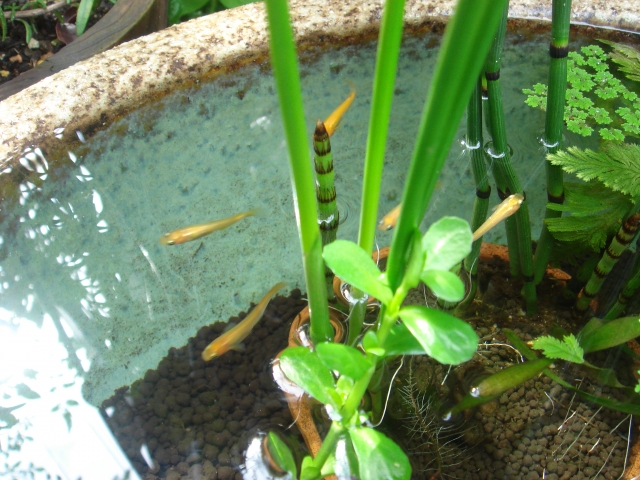
Walk through a Japanese neighborhood in summer and you will see them on balconies and doorsteps: glazed ceramic bowls holding floating plants, pondweed, and a school of small rice fish. In Japan we call this miniature ecosystem a biotope (ビオトープ), from the Greek bio (life) and topos (place), a word that here means a self-balancing container pond: no pump, no filter, no electricity. Just water, soil, plants, and animals keeping each other alive.
One fork first. If you want an in-ground pond with a liner, a pump, and koi, that is a construction project, not this guide. This one is for you if you have a patio, balcony, or sunny deck corner and an afternoon. Americans are arriving at the same idea as the "patio pond"; the Japanese version adds decades of refinement and one particular fish, the medaka (メダカ), the Japanese rice fish. Here is the method, adapted for American containers, plants, and winters.
- A biotope (ビオトープ) is a self-balancing container pond. Fish, shrimp, snails, bacteria, and plants form a cleaning cycle; once it stabilizes, you almost never clean.
- Five essentials: container (suiren-bachi), creatures, dechlorinated water, substrate such as akadama clay, and plants.
- Wait 7 to 10 days before adding fish, then start with 2 or 3 medaka for the first month. Ongoing care is just top-offs, trimming, and light feeding.
- Fish eat mosquito larvae; for plant-only setups, Bti mosquito dunks are the standard US fix.
- Check your state's invasive plant list: water hyacinth is restricted in some states. Overwintering is a USDA zone question.
What "Biotope" Means in Japan
Ecologists use the word for a habitat where a community of species lives in balance. Japanese hobbyists use it in a friendlier sense: a place where creatures live comfortably, close to nature, even in a small space. In practice that means a container pond kept simple enough to balance itself. The traditional vessel is the suiren-bachi (睡蓮鉢), a wide glazed ceramic bowl, literally "water lily pot," made to sit outdoors in sun, wind, and rain. It is the Japanese equivalent of a bird feeder: a piece of nature checked each morning with a cup of tea in hand.
The Cycle That Cleans the Water
A biotope stays clean because its residents run a tiny water-treatment plant:
- Medaka eat microorganisms and produce waste.
- Shrimp graze the algae.
- Trapdoor snails and loaches till the substrate.
- Bacteria and microbes in that substrate break the waste down.
- Plants absorb the resulting nutrients, and the water stays clean.
Once this cycle establishes, water quality stabilizes and you almost never need to clean — the big difference from keeping an aquarium. Sunlight powers the loop, and the animals need it too, so a biotope lives outdoors. Ordinary rain is fine; even in overflow, fish are rarely washed out. In a torrential downpour, lay a board over part of the container.
What You Need: The Five Essentials
The Japanese checklist is five items, all sold in the US.
| Item | Japanese standard | US equivalent |
|---|---|---|
| Container | Suiren-bachi, resin medaka bowls, tubs, foam boxes | Glazed planter (drainage hole plugged), poly stock tank, barrel with liner, foam cooler |
| Creatures | Medaka, shrimp, snails; goldfish in larger tubs | Medaka from US breeders; White Clouds, cherry and Amano shrimp, trapdoor snails |
| Water | Tap water aged 1 to 2 days in sunlight | Sun-aging, or a dechlorinator where the utility uses chloramine |
| Substrate | Akadama (赤玉土) clay, medaka soil, gravel, sand | Akadama sold as bonsai soil, aquatic plant soil, pea gravel |
| Plants | Floaters, submerged weeds, marginals | See the plant section below |
Beyond the five, keep a reed screen, a board, and netting on hand for harsh sun, storms, and insects. Deep and large is easiest: more water means steadier temperature and chemistry, and depth lets you adjust the level with the seasons. Akadama is the popular substrate; medaka breeders often use medaka soil, lily-focused water gardens a heavier pond loam. A filled bowl is heavy, so place it before filling.
How to Set It Up, Step by Step
1. Place the container
Pick a spot with good sun and good airflow. Ventilation matters as much as light: it keeps plants from steaming and blunts sudden water-temperature spikes. In a hot US summer, plan on that reed screen for the fiercest afternoon hours.
2. Add substrate and set the plants
Spread a layer of substrate across the bottom. Plant into small pots where convenient; potted plants are easier to rearrange and to rescue if one fails.
3. Pour the water slowly
Fill gently so you do not blast a crater in the substrate; the Japanese trick is to cup your palm where the water lands. Use dechlorinated water, covered below.
4. Wait 7 to 10 days
A just-built biotope is not stable: fresh substrate is still shedding nutrients and the plants have not settled in. After about ten days the water calms, and animals can go in with far less risk. Remove any plant that died in the meantime.
5. Add fish a few at a time
Start with 2 or 3 medaka, hold there for the first month, and add more once the water proves stable. Acclimate first: float the bag about 20 minutes, then mix pond water into it bit by bit before release. Japanese keepers call this mizu-awase (水合わせ), "water matching."
Choosing Plants, the American Edition
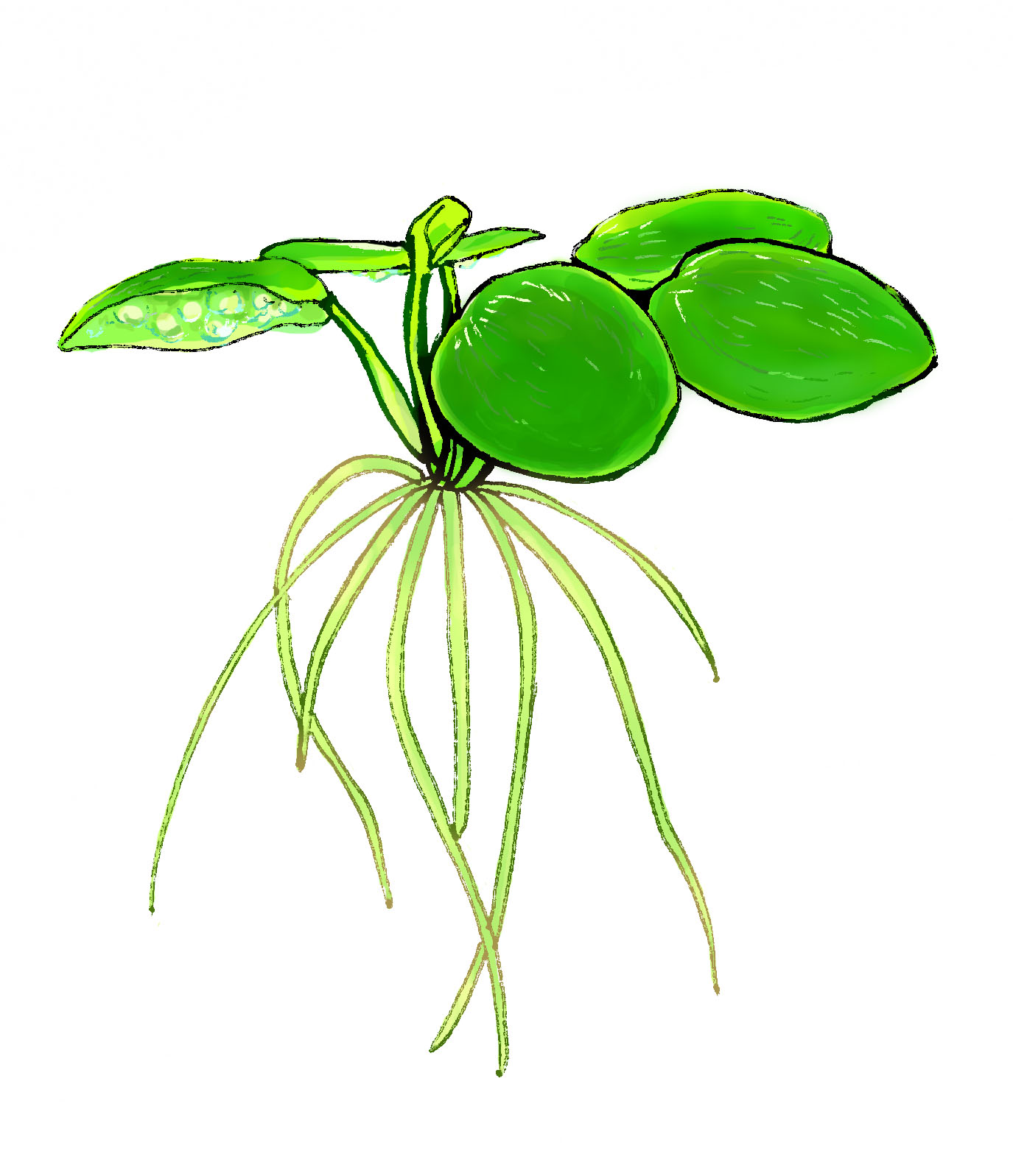
Plants are the showpiece. Pick for the finished picture you want, favoring species that tolerate temperature swings. The classic Japanese lineup translates to US nurseries in three layers. Expect many to die back in winter; some regrow from the same pot in spring.
- Floating and floating-leaf: water hyacinth is the Japanese default, prized because its shade doubles as a hiding place for fish, with water poppy as a companion (see the legal warning below); frogbit is a safer floater in most states.
- Submerged: hornwort (matsumo) and anacharis, the two standard medaka weeds, good oxygenators and fry shelter. Anacharis is itself restricted in some states, so check it too.
- Marginal and emergent: Sagittaria graminea, a US native, plus water horsetail, water clover, and pennywort give the pond its vertical line.
Choosing the Creatures

The selection rule: choose animals that ride out day-to-night temperature swings and the seasons. That points at Japan's paddy and stream species, nearly all sold in the US.
- Medaka (Oryzias latipes) — the star. A two-inch (5 cm) rice fish, easy for beginners, bred into showy varieties: shimmering lamé scales, orange, platinum, blue.
- White Cloud Mountain minnows — on the Japanese stocking list too (as akahire), and the easy chain-store substitute.
- Shrimp — Japan uses its native grass shrimp; the US equivalents are cherry and Amano shrimp. They cover the algae-grazing role.
- Trapdoor snails and small loaches — the substrate crew. Japanese trapdoor snails are a US pond-trade staple, and they help purify the water.
Goldfish appear in Japanese biotopes too, but in larger tubs; in a bowl, stay with medaka-scale animals. And whatever the end goal: 2 or 3 fish in month one, more only after the water proves itself.
Three Ways to Lay It Out
Japanese biotopes follow one of three directions. A plant-forward layout packs in submerged and floating species and builds the richest ecosystem for medaka and shrimp. A creature-forward layout keeps planting minimal so the animals are easy to observe; for breeding, center it on water hyacinth (where legal) or hornwort, whose fine roots make eggs easy to collect. A flower-forward layout stars blooming aquatics, with one warning: aquatic plant fertilizers can harm livestock, so confirm a product is fish-safe first.
Everyday Care
The whole routine is topping off water, trimming plants, and feeding lightly.
Topping off. Three situations call for it. On hot days, evaporation concentrates the water, so top off to hold the chemistry steady. On cold days, keep the level high; a fuller container resists freezing. And if green water gets dense, thin it until you can just see the bottom; green water is harmless suspended algae, prized as fry food, and our green water guide covers both sides of that story. A top-off nudges temperature and quality back into line, not just volume.
The water itself. The traditional source is kumioki (汲み置き) water: tap water left in the sun for a day or two so the chlorine dissipates, preferred to conditioners as closer to nature. Keep a bucket of 2.5 gallons (10 liters) or more standing by. One US caveat: many utilities use chloramine, which never evaporates; check your water report, and if so, use an ordinary dechlorinator.
Feeding. An established biotope produces natural food, so offer only what disappears in a couple of minutes and skip days freely; leftovers are the main threat. Below about 50°F (10°C) in fall, stop feeding for the season.
Mosquitoes. The question every American asks, fairly, given West Nile virus. A stocked biotope is not a mosquito nursery; medaka eat larvae at the surface, the job rice farmers valued them for. The risk is fishless containers: for those, use mosquito dunks, the Bti (Bacillus thuringiensis israelensis) tablets at every US garden center, harmless to fish and pets when used as directed.
Getting Through Winter: A USDA Zone Guide
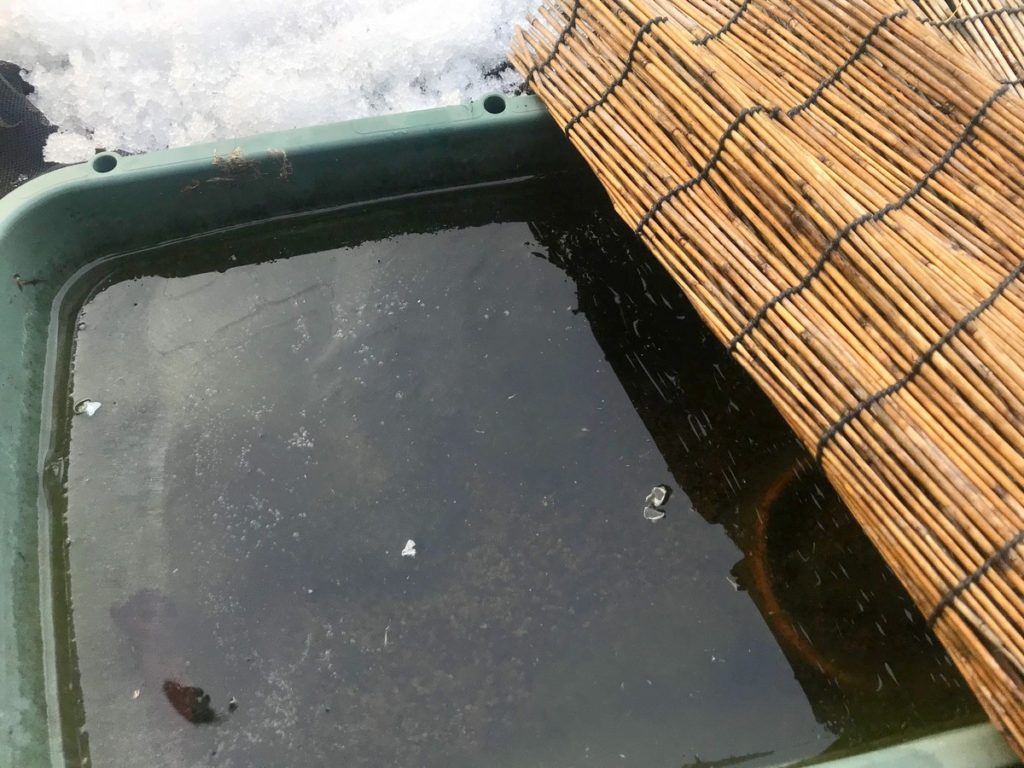
Japanese keepers overwinter medaka outdoors as a matter of course, and they can do it in much of the US. The variable is not the fish but how solid your pond freezes: a USDA zone question. Keep the water level high in every zone.
- Zones 8 to 10: the easy case. Water rarely freezes beyond a skin of ice. Stop feeding and leave the pond alone; medaka spend the cold months near the bottom, nearly dormant.
- Zones 5 to 7: overwintering works if the container is deep enough that unfrozen water remains at the bottom. The one rule: the surface must not seal over for weeks, trapping gases from decomposing plants. A small floating de-icer keeps a breathing hole open.
- Zone 4 and colder: a bowl can freeze nearly solid, and that is not survivable. Move the container, or just the fish in a tub, into an unheated garage or shed. They need no light or food, only clean water that stays cold but liquid.
Next Steps
A biotope that survives its first summer tends to pull its owner deeper. Breeding is the usual first step: medaka hang eggs on fine plant roots through the warm months, and moving a few egg-laden stems to a separate container gives you a homegrown generation. That nursery is also where green water culture, linked above, comes in. And medaka bowls have a way of becoming plural; that is how Japanese balconies end up lined with them. Start with one bowl and a few fish.
FAQ
- Q. Do I really need no pump or filter at all?
- A. Correct: the cleaning cycle of fish, shrimp, snails, bacteria, and plants does the filter's job. If you want more fish than the balance allows, get a bigger container or a second bowl, not a filter.
- Q. Won't a container of standing water breed mosquitoes?
- A. Not if fish live in it; medaka eat larvae at the surface. For plant-only containers, drop in a Bti mosquito dunk monthly: the standard US control, fish- and pet-safe used as directed.
- Q. Can medaka really survive an American winter outdoors?
- A. In much of the country, yes. They overwinter under ice across Japan; the limit is water freezing solid, not cold. In roughly USDA zones 5 to 7, use a deep container, a high water level, and a breathing hole in the ice. In zone 4 and below, move the fish to a cold garage or shed.
- Q. Where do I actually buy medaka in the United States?
- A. Not at the chain pet store yet. Look to hobbyist breeders online, club auctions, and aquatics forums; medaka ship well. If you strike out, White Cloud Mountain minnows suit the same setup.