Raising Medaka Fry: Getting Them Past the First Month
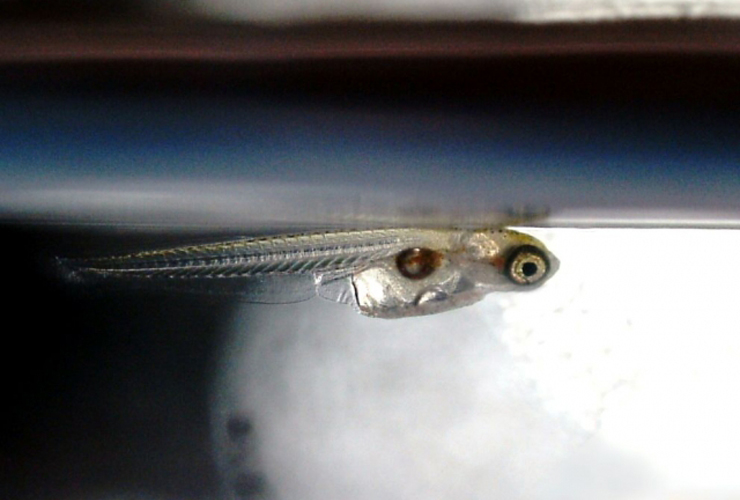
In Japan we have a name for newly hatched medaka: hariko (針子), "needle fry," because that is what they look like — glass needles drifting just under the surface. They hatch carrying a built-in lunchbox, a yolk sac that feeds them for about their first two days. After that, everything depends on you.
This guide picks up where our medaka eggs guide leaves off. The eggs have hatched, and you now have fry less than half the size of their parents, with mouths so small that adult food might as well be gravel. The first two weeks are the dangerous stretch; clear them, and raising medaka becomes one of the easier jobs in the hobby. Here is how our team does it in Tokyo.
- The yolk sac runs out about 2 days after hatching. From then on, feed 3–4 times a day, only what the fry finish in a few minutes.
- Fry cannot store food, so the safest setup keeps food available around the clock: green water or a steady supply of infusoria.
- Water matches the parents: 77–81°F (25–27°C), near-neutral pH, dechlorinated tap water. Run no filter or air stone and hold off on water changes.
- As they grow, sort fry by size. Larger fry steal food, bully smaller ones, and will eventually eat them.
- Return juveniles to the parents only once they handle adult food comfortably, around 0.8 inches (2 cm).
The Two-Week Wall
Most fry losses happen within two weeks of hatching, and the cause is rarely disease. Newly hatched medaka can barely swim, so they struggle to find food on their own, and their mouths are too small for what the parents eat. Rely on adult food and whatever plankton the water happens to hold, and a large share of a clutch starves before day 14. The fix is not complicated: right-sized food, offered constantly, in still water. Everything below serves that one goal.
Water: Same Specs as the Parents, Handled More Gently
Fry do not need special water. The conditions that suit adult medaka suit them too: 77–81°F (25–27°C), near-neutral pH (7.0), and dechlorinated tap water. What changes is the handling. Because fry are weak swimmers, raise them in their own space, a hang-in net breeder inside an aquarium or a separate container outdoors, and unlike the egg stage, stop changing the water every day.
Hold Off on Water Changes
Eggs shrug off daily water changes because the shell protects the embryo; frequent changes are actually how you keep fungus down. Hatched fry are the opposite: sensitive to shifts in water chemistry, and frequent changes both stress them and strip out the beneficial bacteria that keep the water stable. Our preferred trick is to prepare the grow-out container with conditioned water ahead of time, then move the eggs into it just before they hatch, once eyes and bodies are clearly visible inside the shell. That timing follows the degree-day rule from our medaka eggs guide, roughly 250°C·days of accumulated temperature, or about 10 days at 77°F (25°C).
No Filter, No Air Stone
This surprises aquarists trained on tropical tanks: run no filter and no air stone for new fry. They have almost no swimming strength, and any current slowly exhausts them. Oxygen is not the worry you might expect, since fry are so small that their demand is minimal in an open container. If you keep fry in a net breeder inside the parents' tank, check that the filter outflow is not pushing water through the net. A gentle sponge filter becomes an option once the fry have visibly grown.
Feeding: The Three Foods That Work
A fry cannot eat much at once or store what it eats, so the rhythm matters as much as the menu: 3 to 4 times a day, in portions finished within a few minutes, or better still, an environment where food is always present. Three foods, alone or combined, cover the whole first month:
| Food | Strength | Watch out for |
|---|---|---|
| Powdered fry food | Easiest to use; balanced nutrition; keeps well dry | Some fry take to it poorly at first |
| Green water (phytoplankton) | Food available around the clock | Density drifts; hides fouling; can deplete oxygen |
| Infusoria (zooplankton) | Highest nutrition; fastest growth | Short shelf life; best cultured at home |
Powdered Fry Food: The Staple

Start here. Fry-specific powders are milled fine enough for a hatchling's mouth, float at the surface where fry feed, and store easily while carrying balanced nutrition. In the US, Hikari First Bites is the widely available standard; Hikari is a Japanese brand our team uses at work. If some fry cannot get the hang of it, pair the powder with one of the live options below.
Green Water: The Always-Open Buffet
Green water, called aomizu (青水) in Japan, is water colored by living phytoplankton such as chlorella; the greener the water, the denser the plankton. It develops on its own in sunlit outdoor containers, and for medaka fry it is the ideal nursery, a suspension of food they can graze on all day with no feeding schedule to miss.
It has real drawbacks worth knowing first. The density swings with sunlight and water changes, so holding a stable green is tricky for beginners; because the water is already green, it is hard to tell when it has gone foul; and at high density the plankton itself consumes oxygen, so a rich container can tip into oxygen shortage. Watch the water and the fry daily, and act fast when something looks off. We cover concentration targets and step-by-step production in our green water culture guide.
Infusoria: Live Food for the Smallest Mouths
Infusoria is the classic aquarist's word for tiny zooplankton, above all paramecium. The famous live food for medaka is daphnia, but a hatchling cannot fit one in its mouth; paramecia are far smaller and suit hatchlings perfectly, and they are the most nutritious option here, the one Japanese breeders reach for when they want fast, sturdy growth. Live cultures are sold online. To feed, strain some culture water through a coffee filter and add the concentrated paramecia to the fry container, or draw up culture water with a pipette and dose it directly.
From about one month old, fry graduate to newly hatched daphnia, rich food that fills fish out quickly. Wait until the fry are truly big enough, and note that daphnia eat phytoplankton, so adding them to a green-water container thins the green. By that age fry also handle powdered food well, and combining the two gives balanced growth.
Culture Paramecia in a Bottle: The Japanese Breeder's Routine
Bought cultures are fragile and often arrive depleted from shipping, and a hungry batch of fry will outpace a single bottle. Culturing your own gives a steady, lively supply without repeat purchases, and it takes five minutes: fill a 16.9-oz (500 ml) bottle with dechlorinated tap water, add food for the paramecia (a splash of green water or liquid chlorella, a brewer's yeast tablet, or the starchy water left from rinsing rice), pour in your starter, and leave it somewhere dark and room-temperature with the cap half-open, since paramecia need oxygen and must never be sealed in.
Within a few days to a week the water shows swarms of white specks. When the culture is dense, start a fresh bottle, seed it with a small pour from the old one, and repeat indefinitely. Paramecia also eat bacteria and green algae, so a light dose in the rearing container helps hold water quality as well as feed the fry.
Containers: Small, Simple, and More Than One

Fry do not need an aquarium. For outdoor rearing with many fry, use a medaka bowl or a styrofoam box; shallow vessels are fine. Skip clear plastic storage boxes outdoors, since UV makes them brittle; FRP (fiberglass-reinforced plastic) containers hold up far better in the sun. Indoors with a small brood, almost anything works: a dollar-store container, a plastic breeder box, even the bottom half of a cut bottle. Medaka multiply fast in good conditions, so keep a spare or two ready before you need them.
Sort by Size, or the Big Ones Eat the Small Ones
Fry from the same clutch grow at different speeds, and the gap widens week by week. Larger fry then chase and bully smaller ones and outcompete them for every meal; keep a month-old juvenile with new hatchlings and the hatchlings can end up as food. Medaka are peaceful fish, but anything mouth-sized is fair game. The countermeasure is simple: when size differences become obvious, split the fry into separate containers by body length. Breeders in Japan treat this as routine, and it is the single best lever for raising the share of a clutch that reaches adulthood.
Rejoining the Parents
Fry can move in with the adults once they eat the adults' food without struggling, at roughly 0.8 inches (2 cm). If the containers differ in temperature or chemistry, acclimate the juveniles slowly, the way you would introduce any new fish. Even then, curious adults may chase the newcomers, so add extra plants as cover and watch the tank at first. If the fry container gets crowded before that point, resist merging early; keep the juveniles separate until adult food is clearly no problem. This is also a good time to add a sponge filter or gentle aeration, so the young fish adjust to moving water before joining the main tank.
FAQ
- Q. What do I feed newly hatched medaka, and when do I start?
- A. Nothing for the first two days; hatchlings live off the yolk sac. From day 2 or 3, feed powdered fry food 3–4 times daily in small portions, or keep them in green water or infusoria-dosed water where food is always available.
- Q. Do medaka fry need a filter or an air pump?
- A. No, and they are better off without both at first. Fry can barely swim, so any current wears them out, while their oxygen needs are too small to worry about in an open container. Add a gentle sponge filter only once they have grown.
- Q. How often should I change the fry's water?
- A. As rarely as you can in the early weeks. Fry are more sensitive to sudden water swings than to slightly aged water, and frequent changes strip out beneficial bacteria. Control pollution at the source: small portions, nothing left uneaten.
- Q. When can the fry go back in with the adults?
- A. Once they comfortably eat the same food as the adults, around 0.8 inches (2 cm). Acclimate them if the water differs, add plants for cover, and watch closely at first, since adults sometimes chase new juveniles.